Please review our Return Policy.
Approx. Dimensions (Framed): 20.25” × 17.5”
Artist: French School, 19th-century (Unsigned)
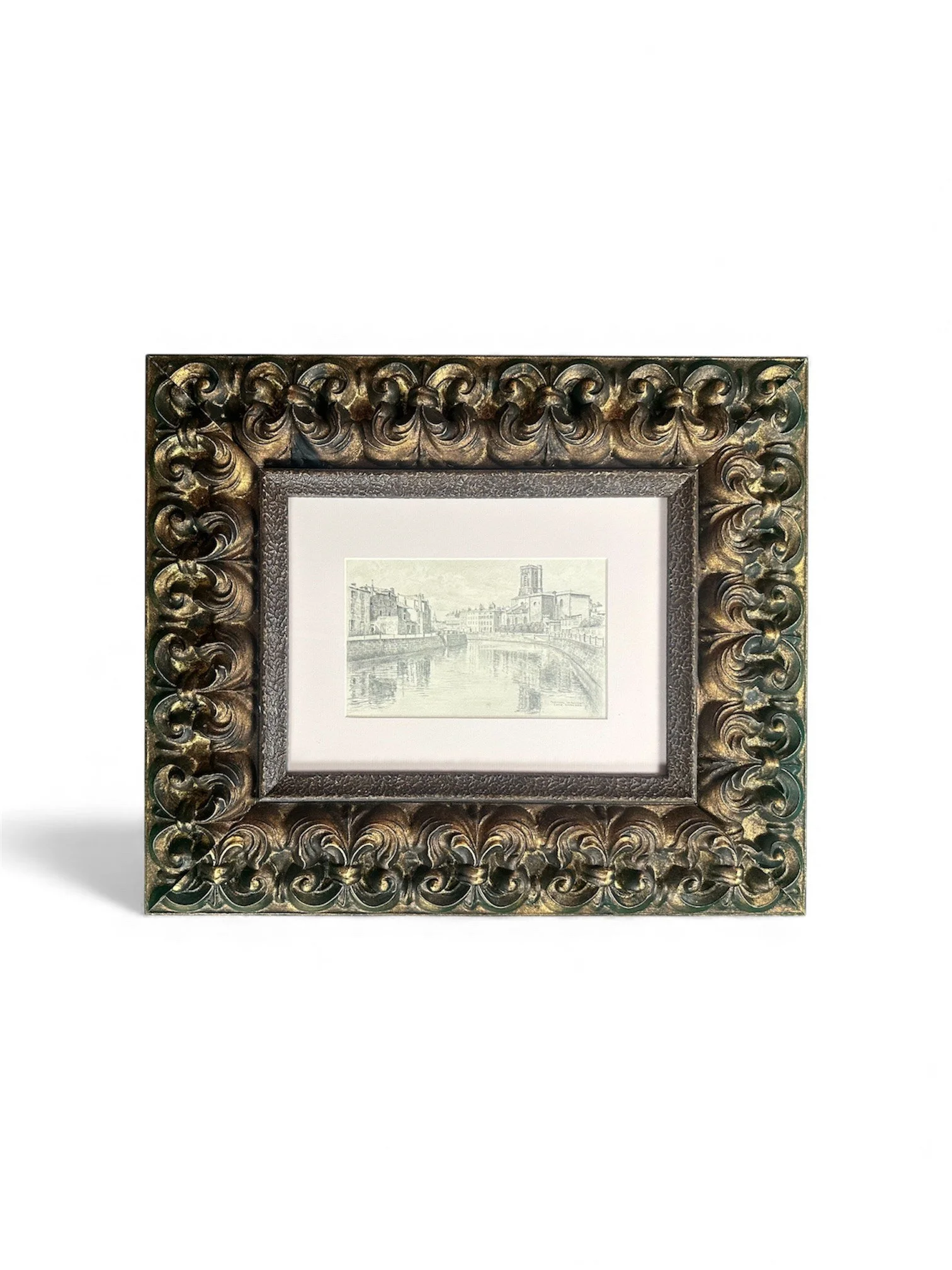
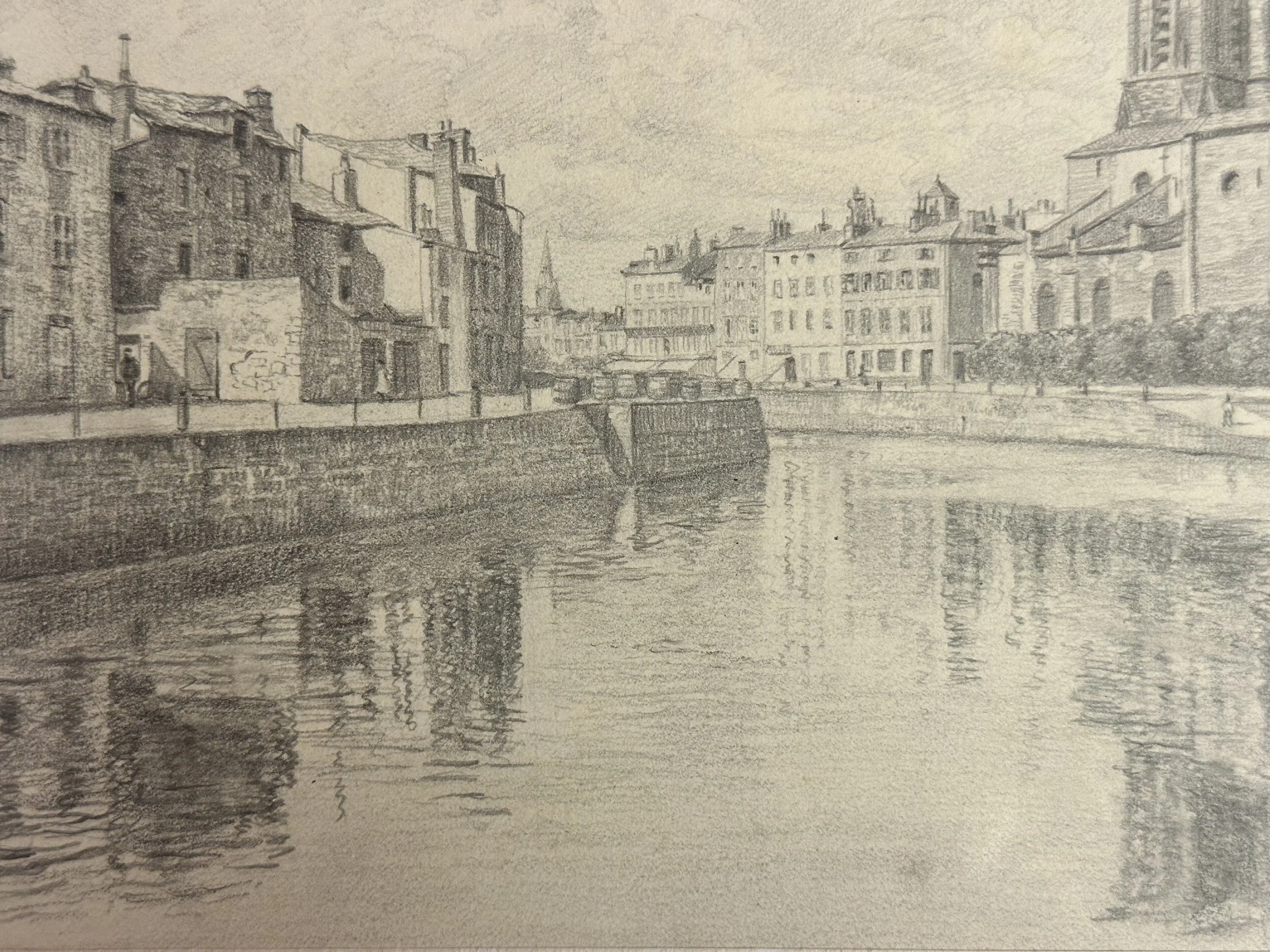
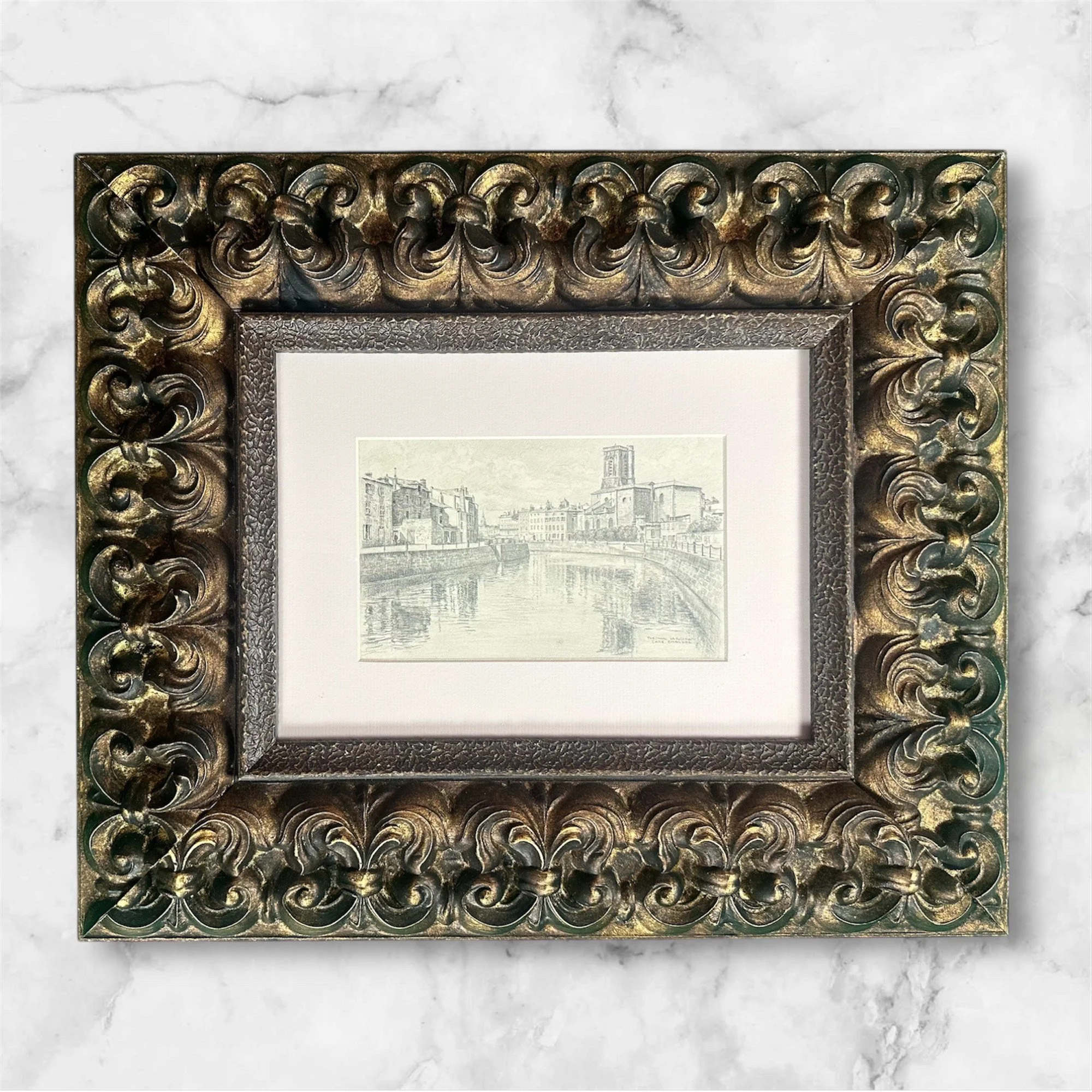
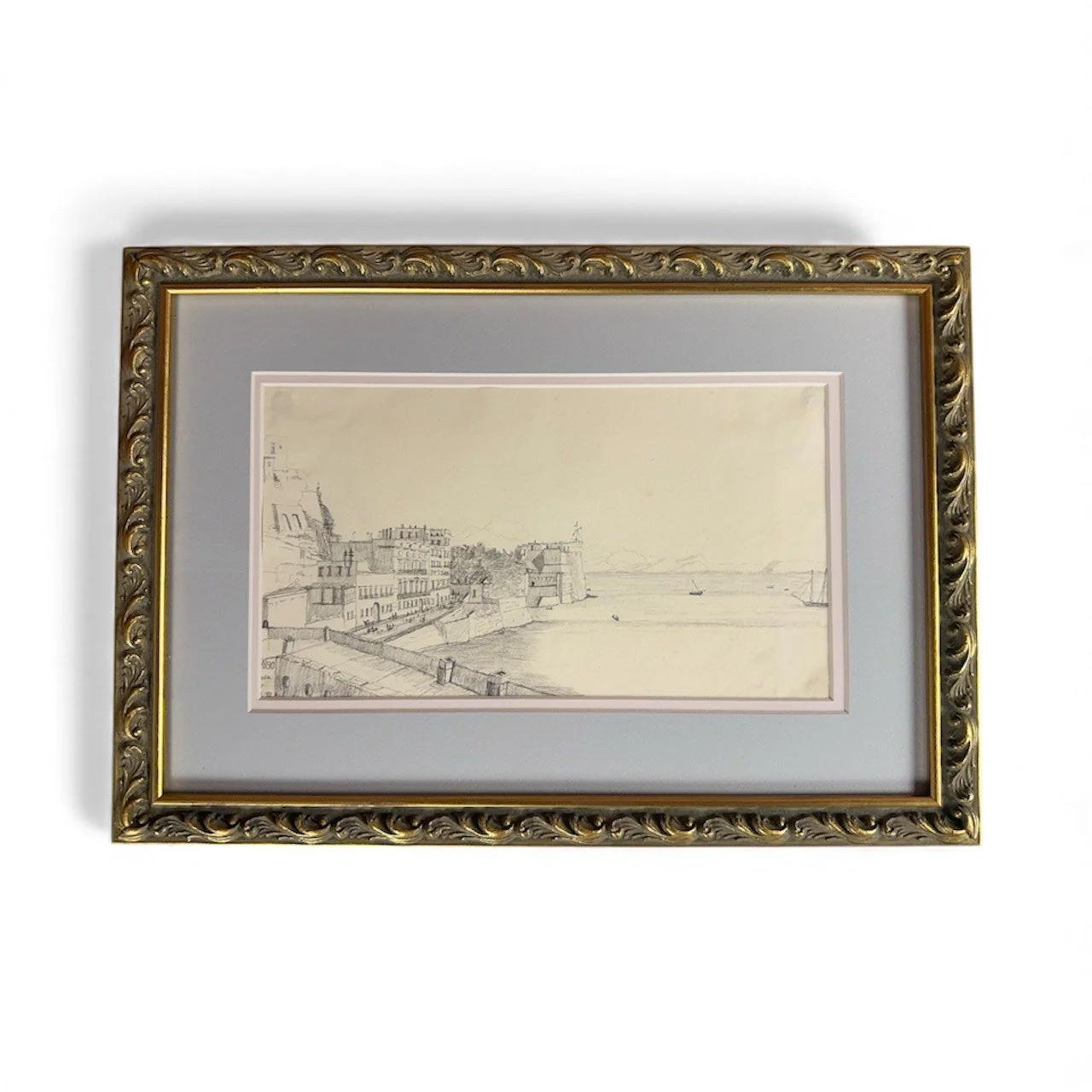
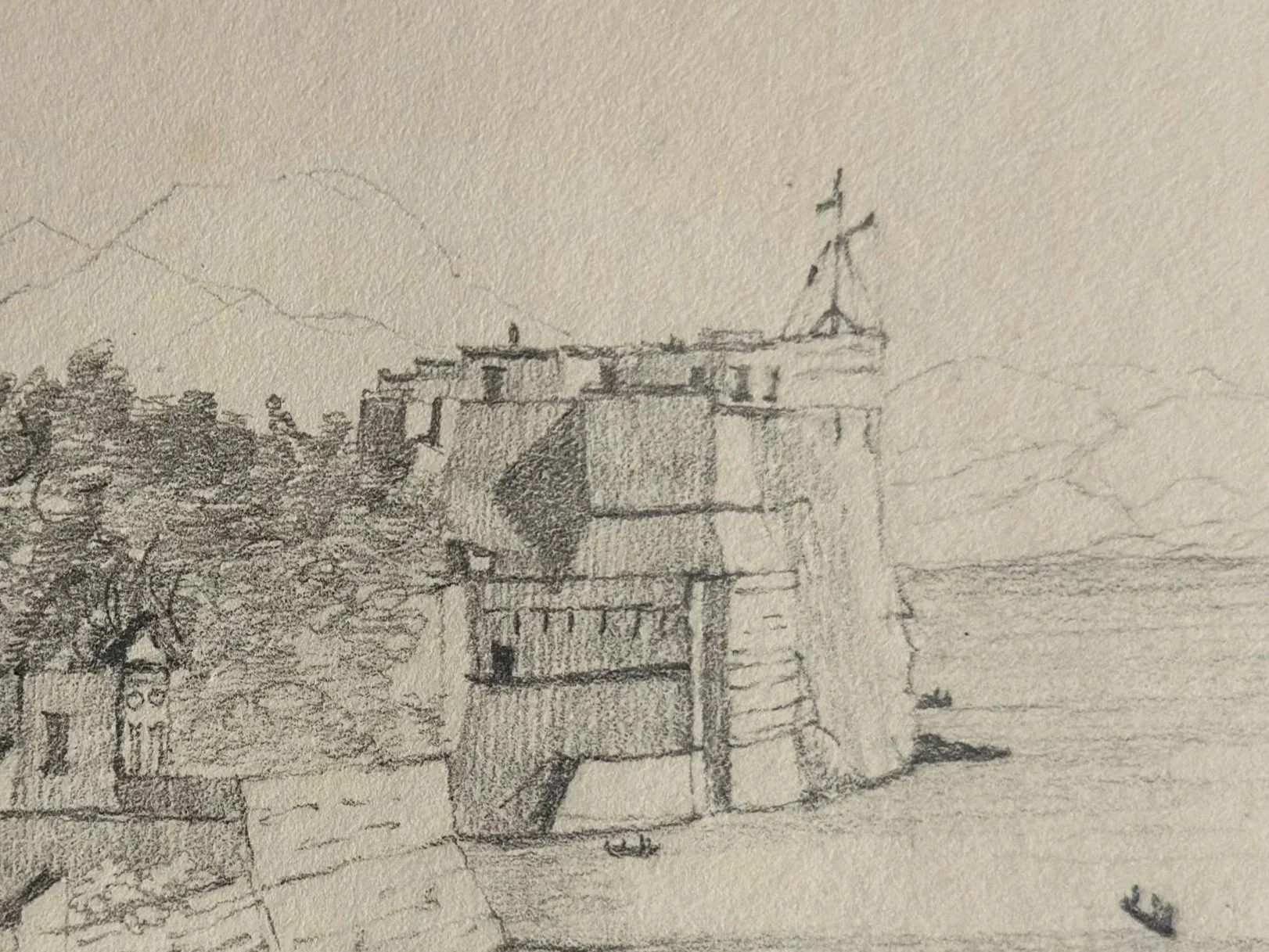
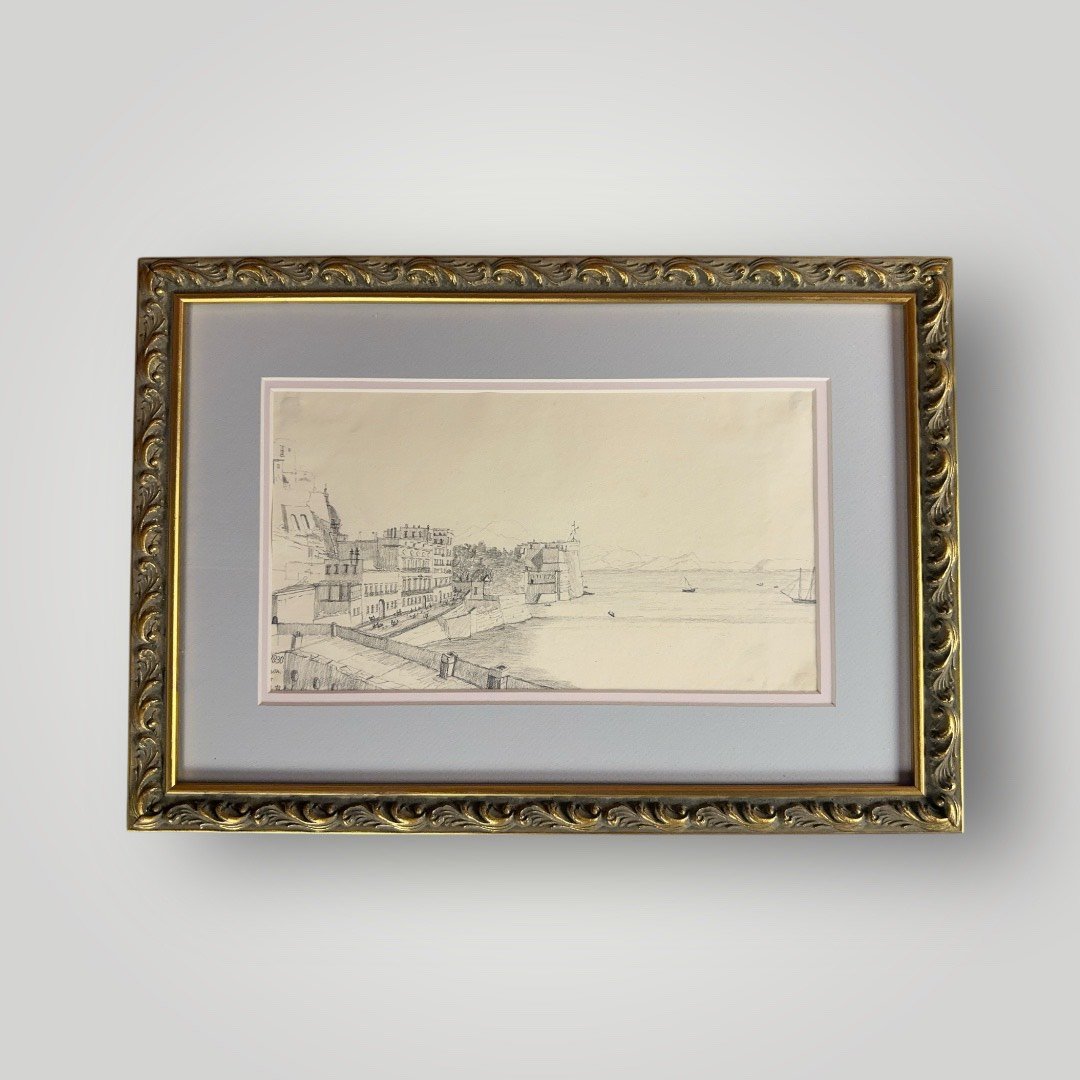
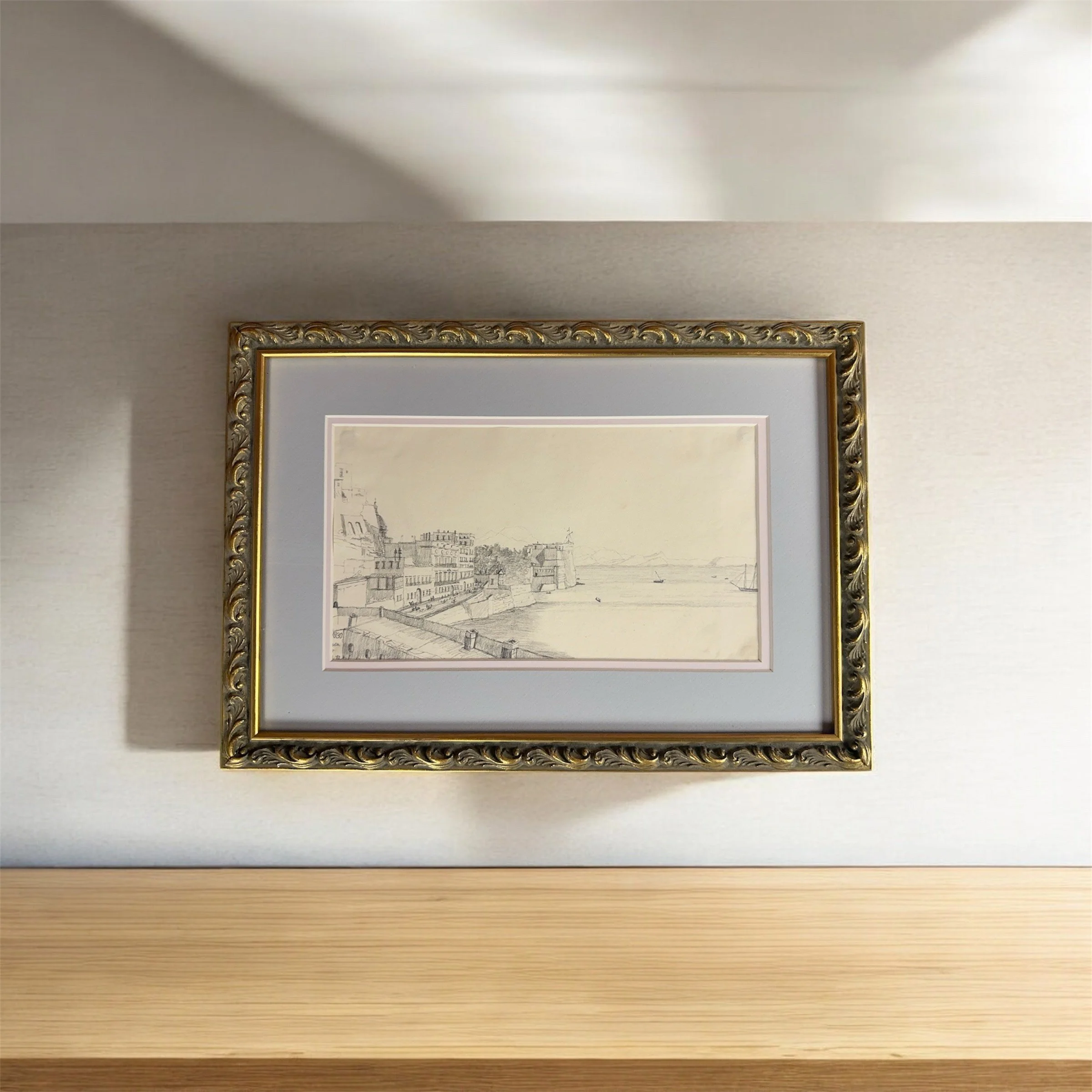
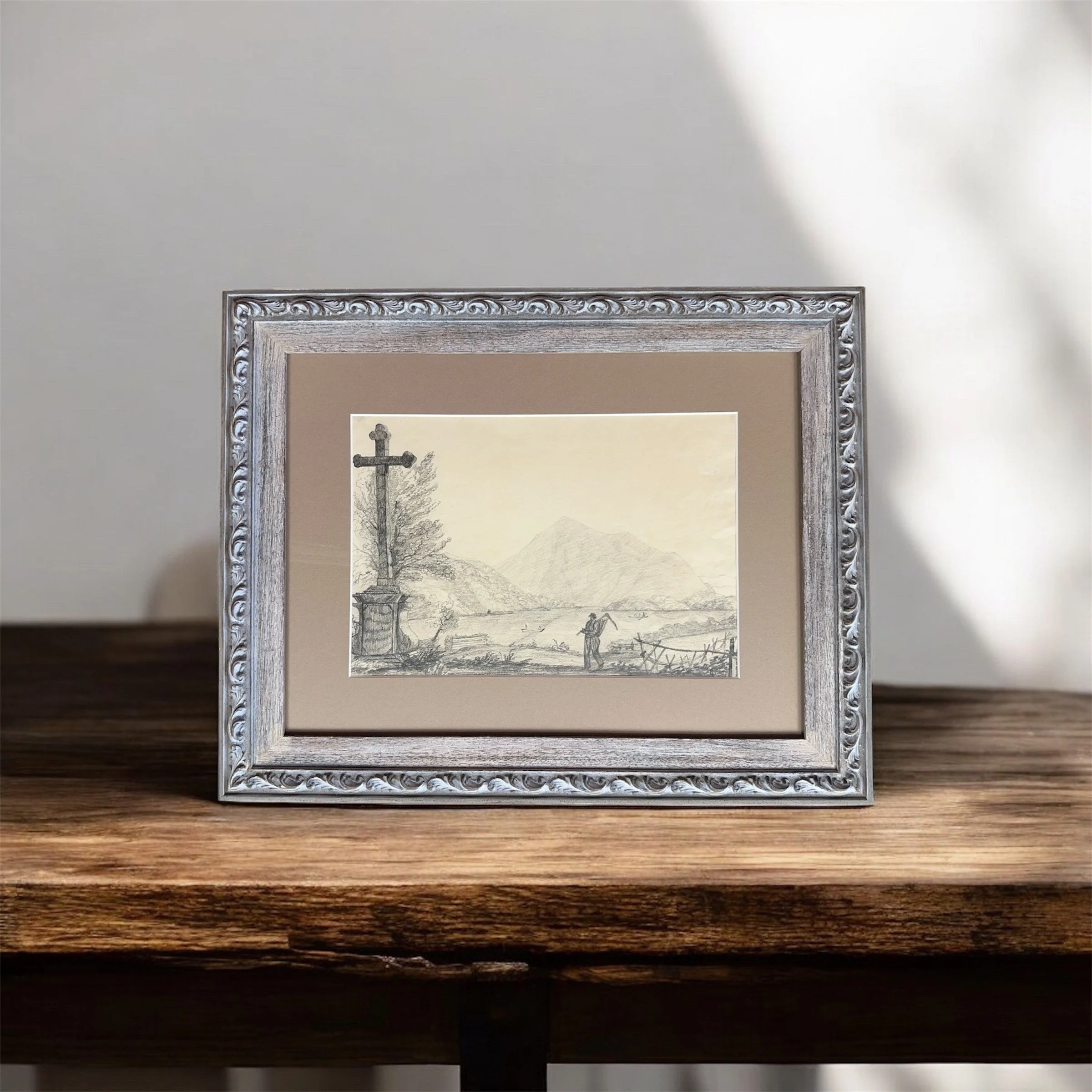
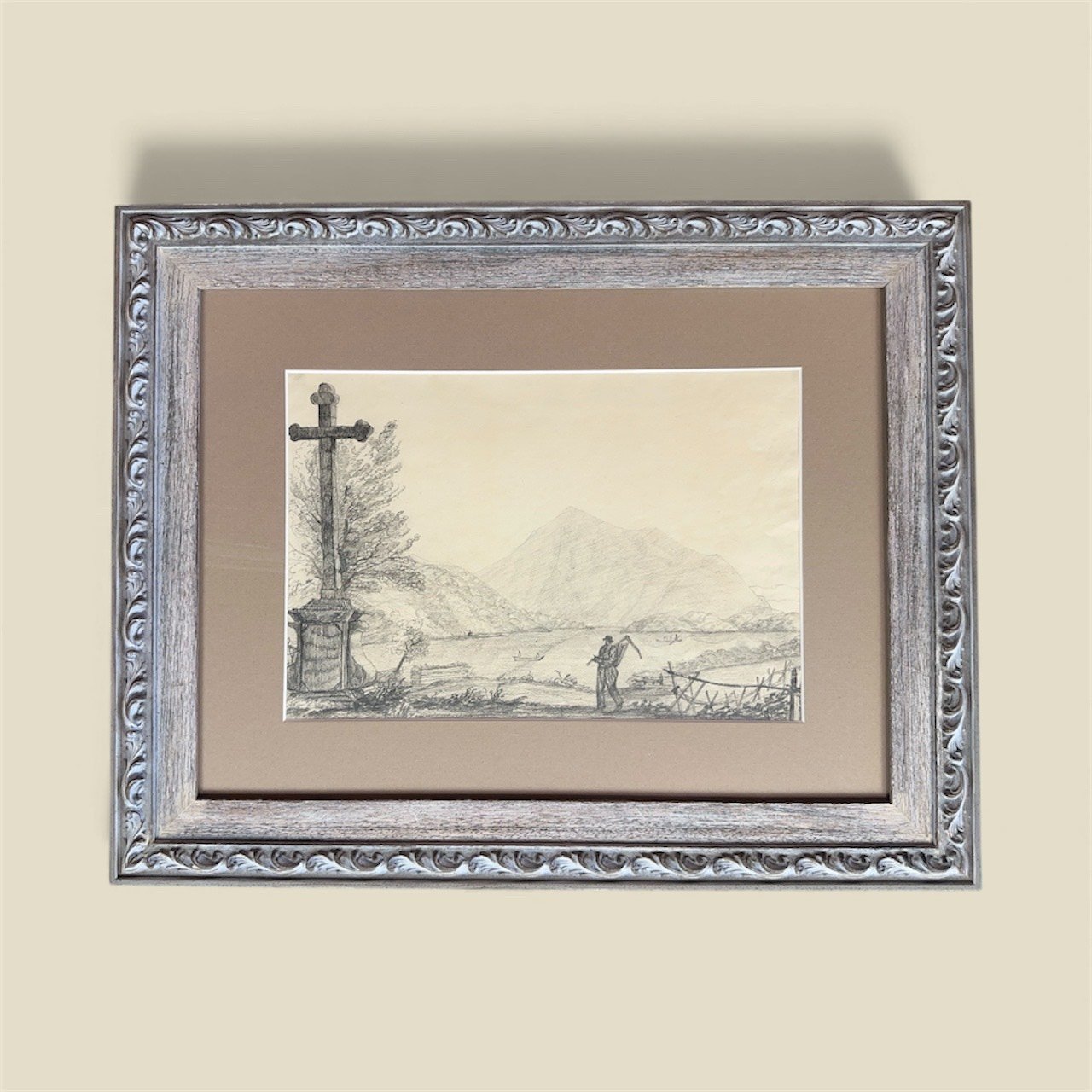
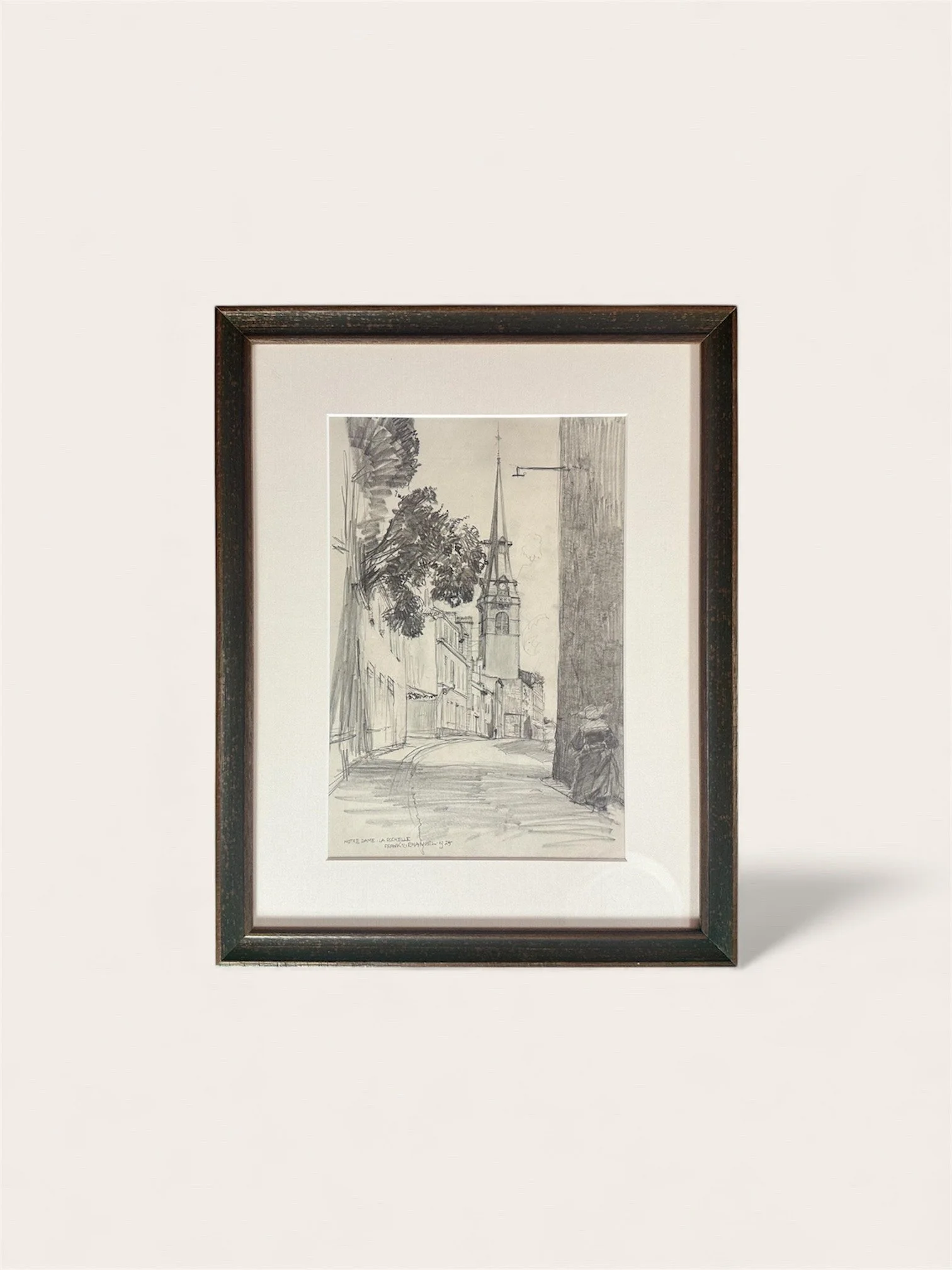
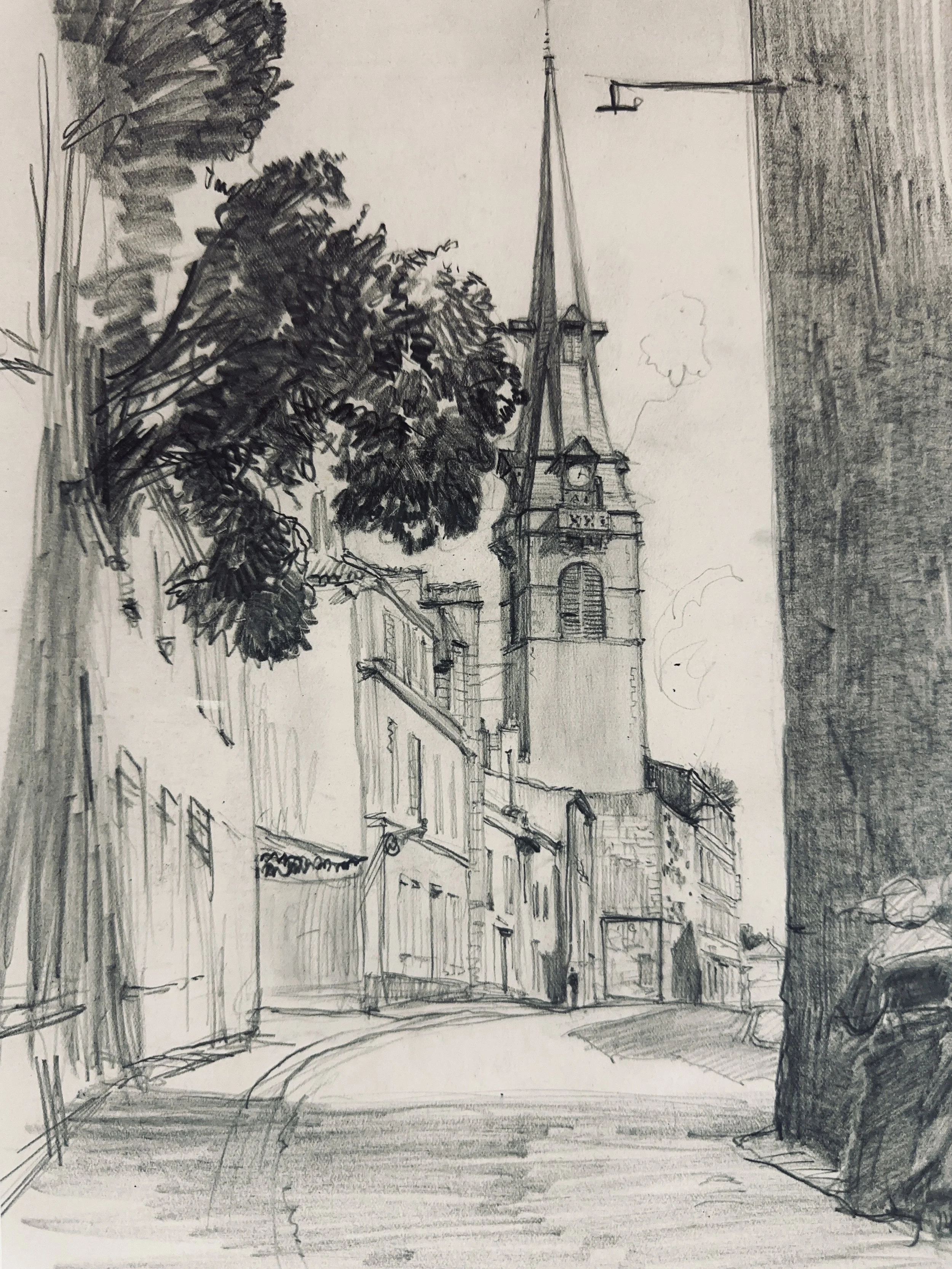
An extraordinarily vivid and minutely observed panorama of Toulouse at the very end of its age-old river economy. Executed with the precision of a master topographical draftsman, this large and luminous drawing captures the Pont Neuf – the city’s proud 16th–17th-century masterpiece – from the Saint-Cyprien bank on a calm day around 1838.
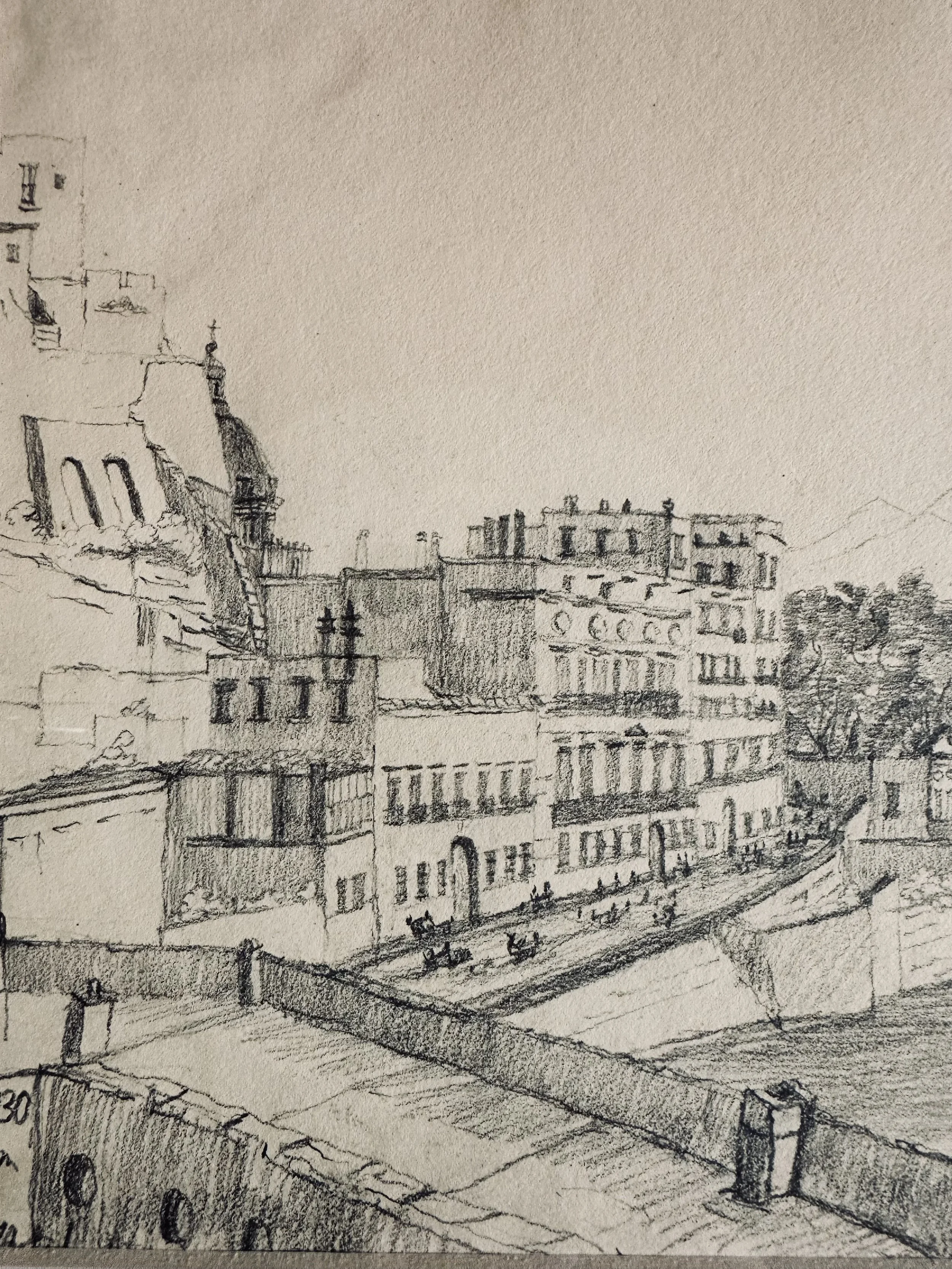
The composition is breathtaking in its breadth and microscopic detail: seven elegant brick arches with their famous oculus flood-relief openings frame the view toward the dense silhouette of the historic left bank. In the foreground, the gently sloping right-bank quay teems with the daily life that has now vanished: washerwomen beating and hanging laundry, and porters rolling enormous wine barrels.
Every figure, every ripple on the water, every brick course is rendered with a clarity and tenderness that rivals the finest works of the French romantic-realist school.
This is not merely a view of Toulouse; it is one of the most complete and atmospheric visual records of pre-industrial river life along the Garonne before the arrival of the railway.
Please review our Return Policy.
Approx. Dimensions (Framed): 20.25” × 17.5”
Artist: French School, 19th-century (Unsigned)
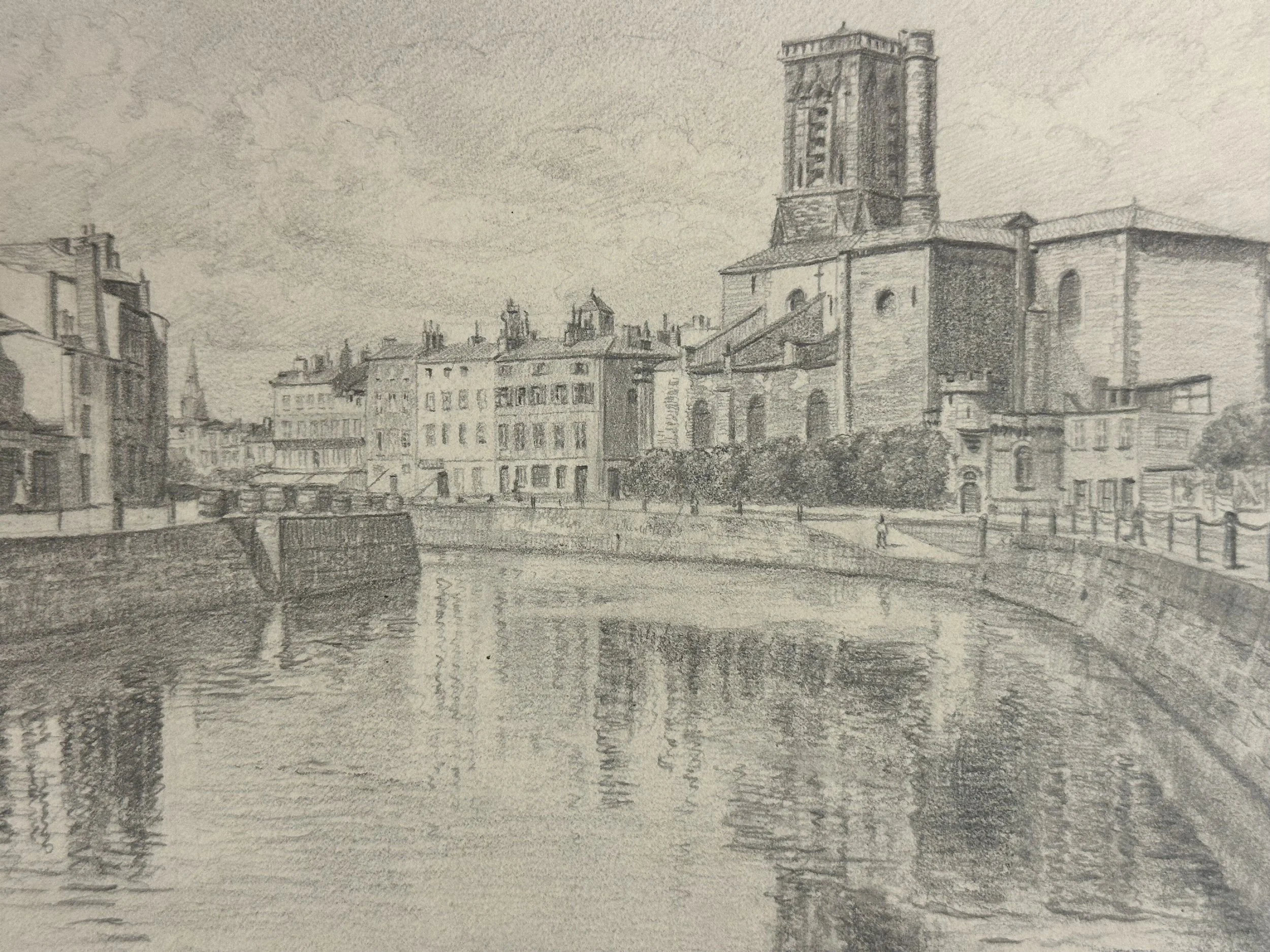
An extraordinarily vivid and minutely observed panorama of Toulouse at the very end of its age-old river economy. Executed with the precision of a master topographical draftsman, this large and luminous drawing captures the Pont Neuf – the city’s proud 16th–17th-century masterpiece – from the Saint-Cyprien bank on a calm day around 1838.
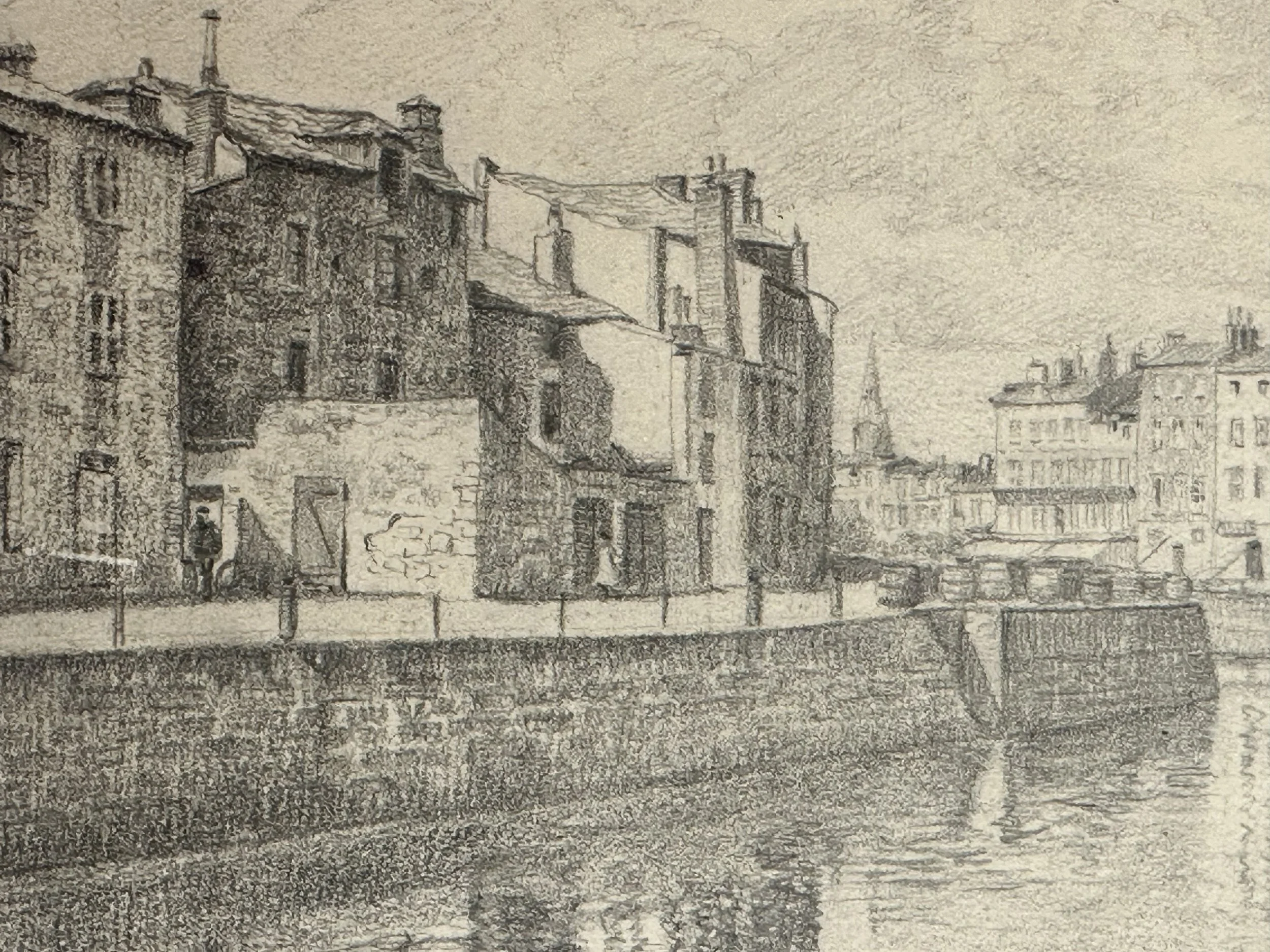
The composition is breathtaking in its breadth and microscopic detail: seven elegant brick arches with their famous oculus flood-relief openings frame the view toward the dense silhouette of the historic left bank. In the foreground, the gently sloping right-bank quay teems with the daily life that has now vanished: washerwomen beating and hanging laundry, and porters rolling enormous wine barrels.
Every figure, every ripple on the water, every brick course is rendered with a clarity and tenderness that rivals the finest works of the French romantic-realist school.
This is not merely a view of Toulouse; it is one of the most complete and atmospheric visual records of pre-industrial river life along the Garonne before the arrival of the railway.

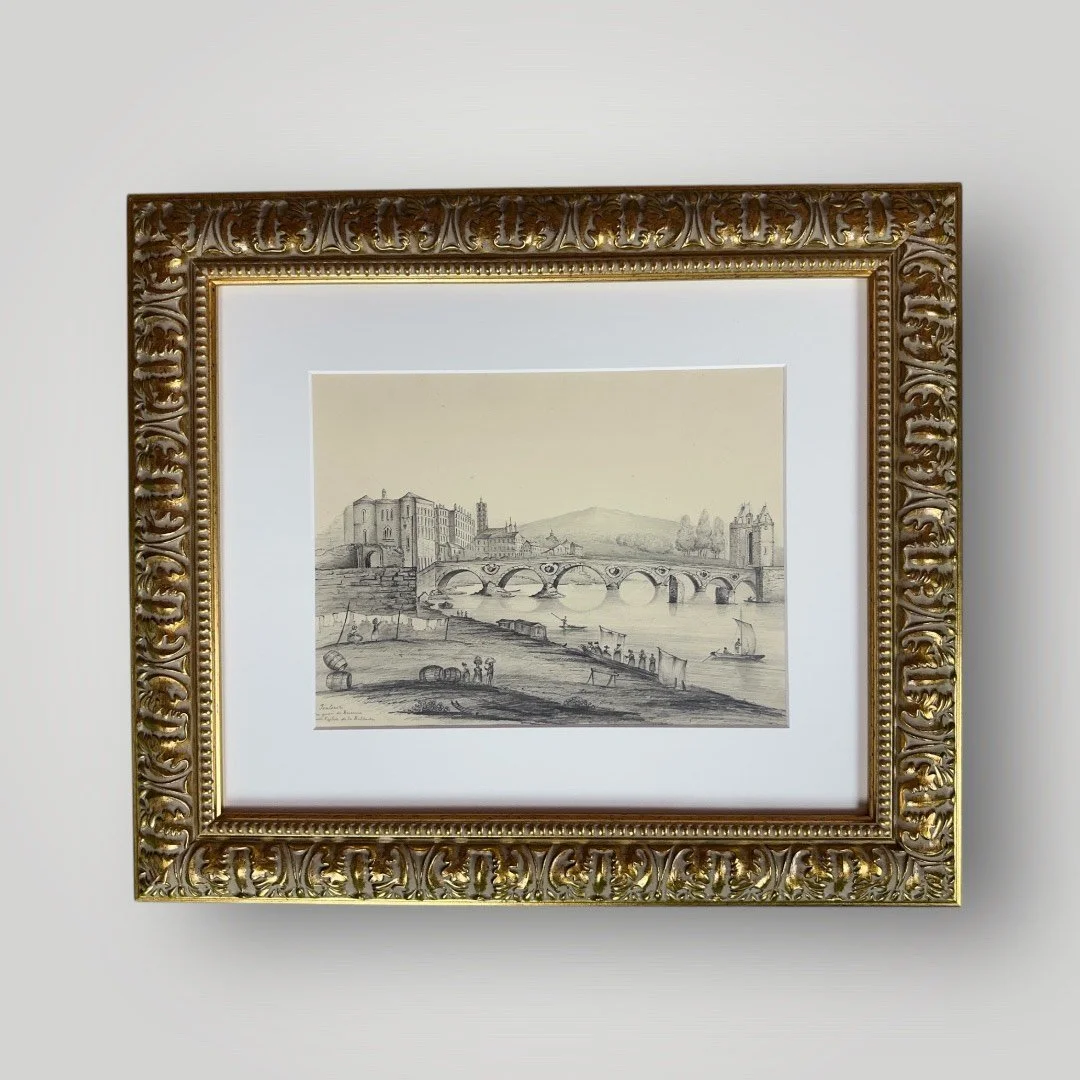 Image 1 of 6
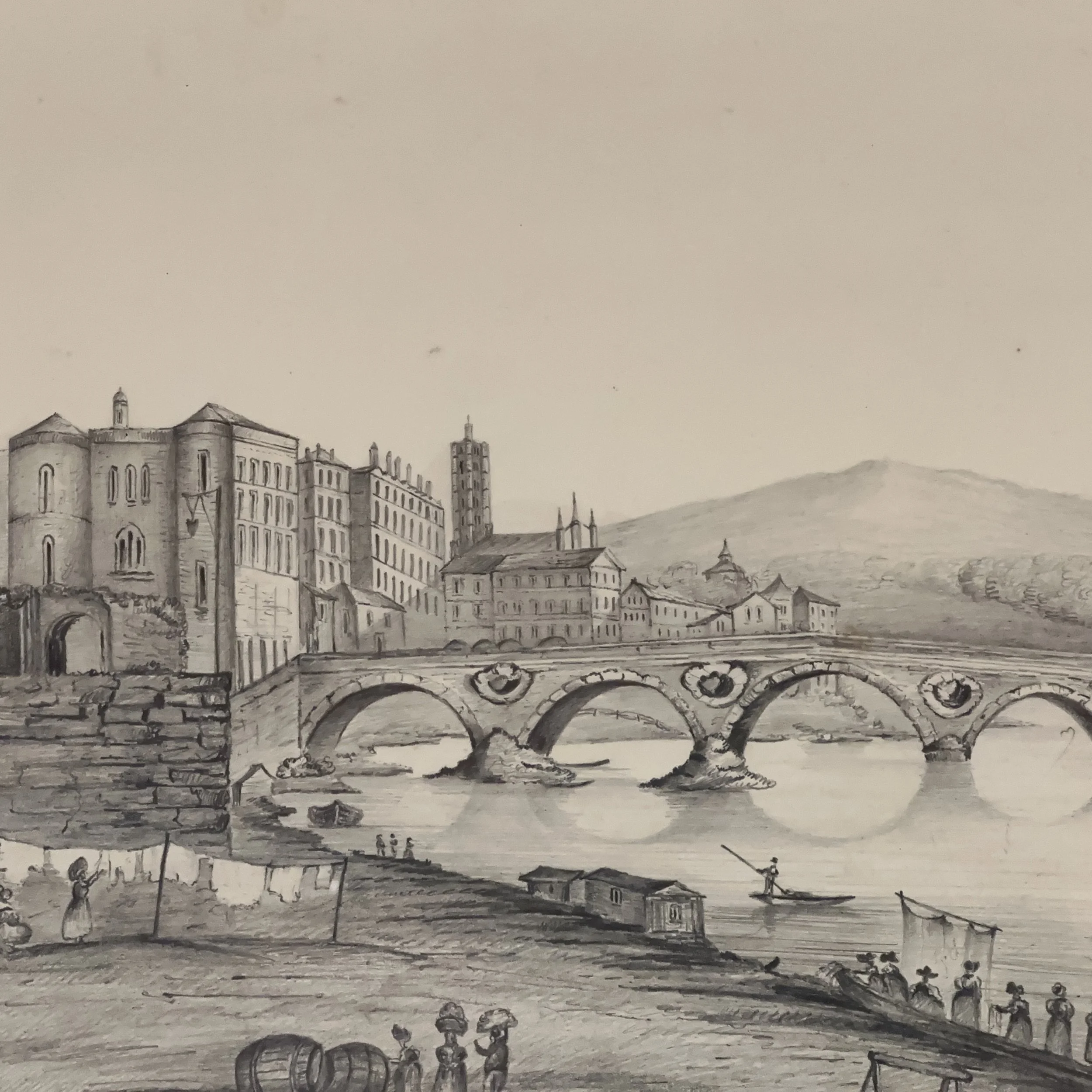 Image 2 of 6
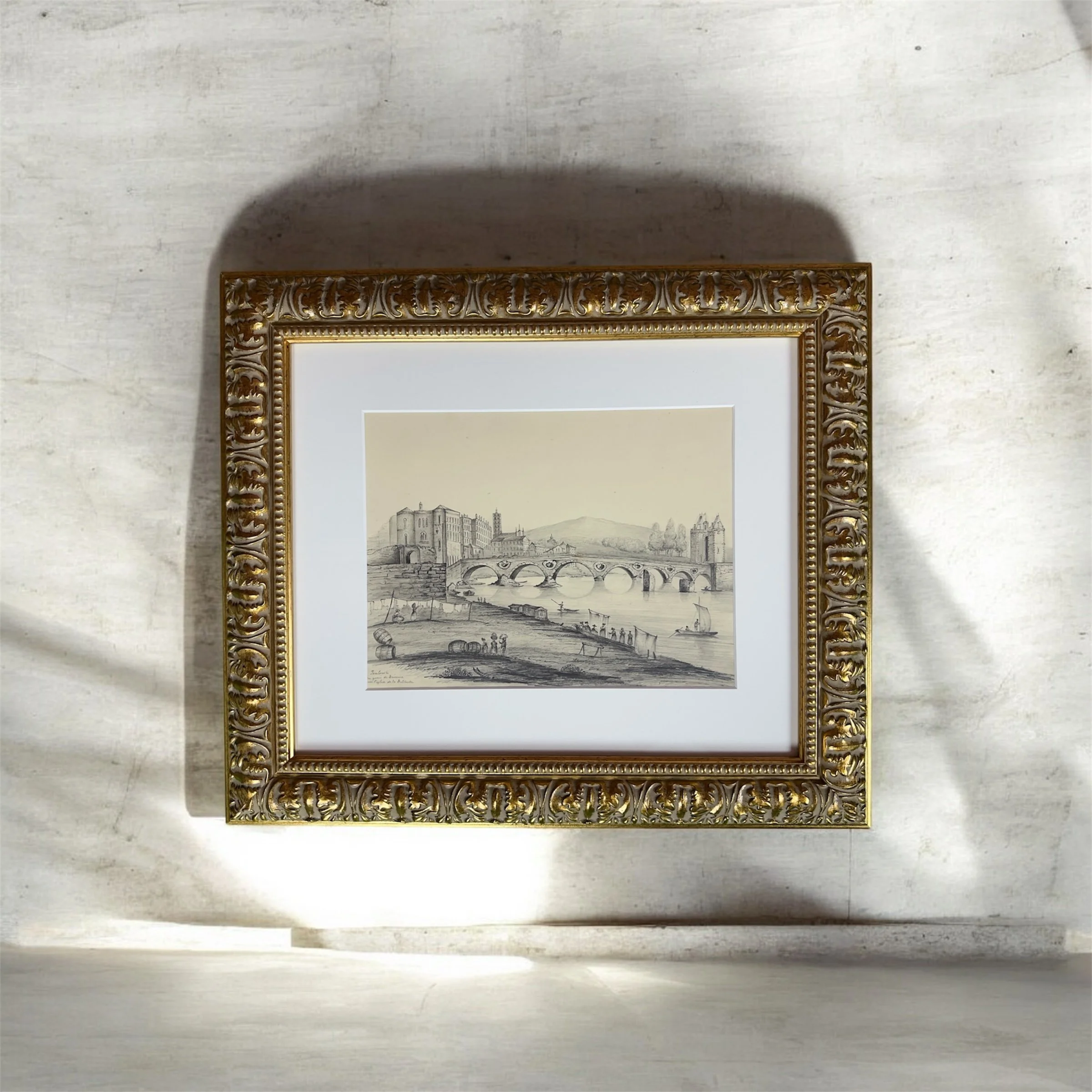 Image 3 of 6
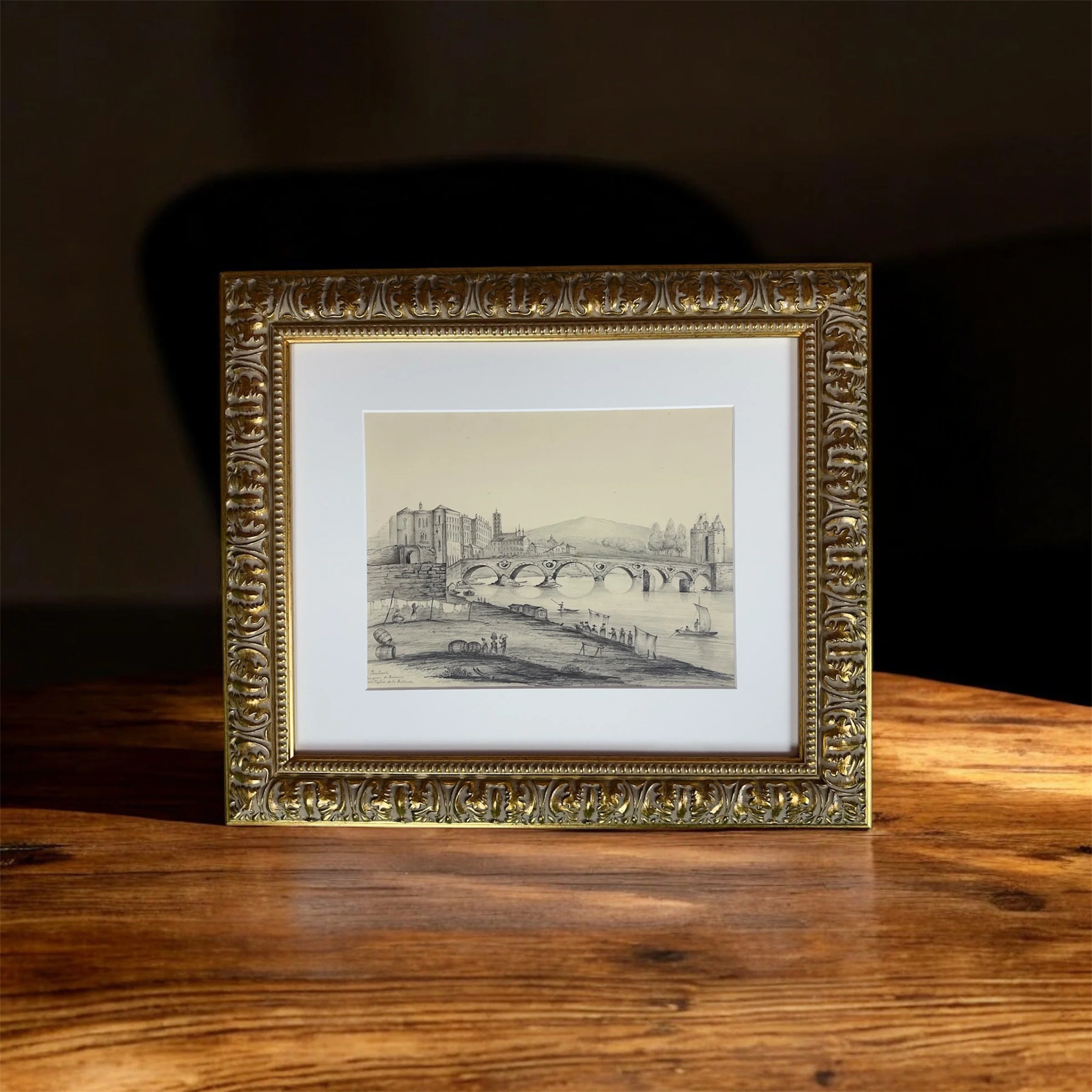 Image 4 of 6
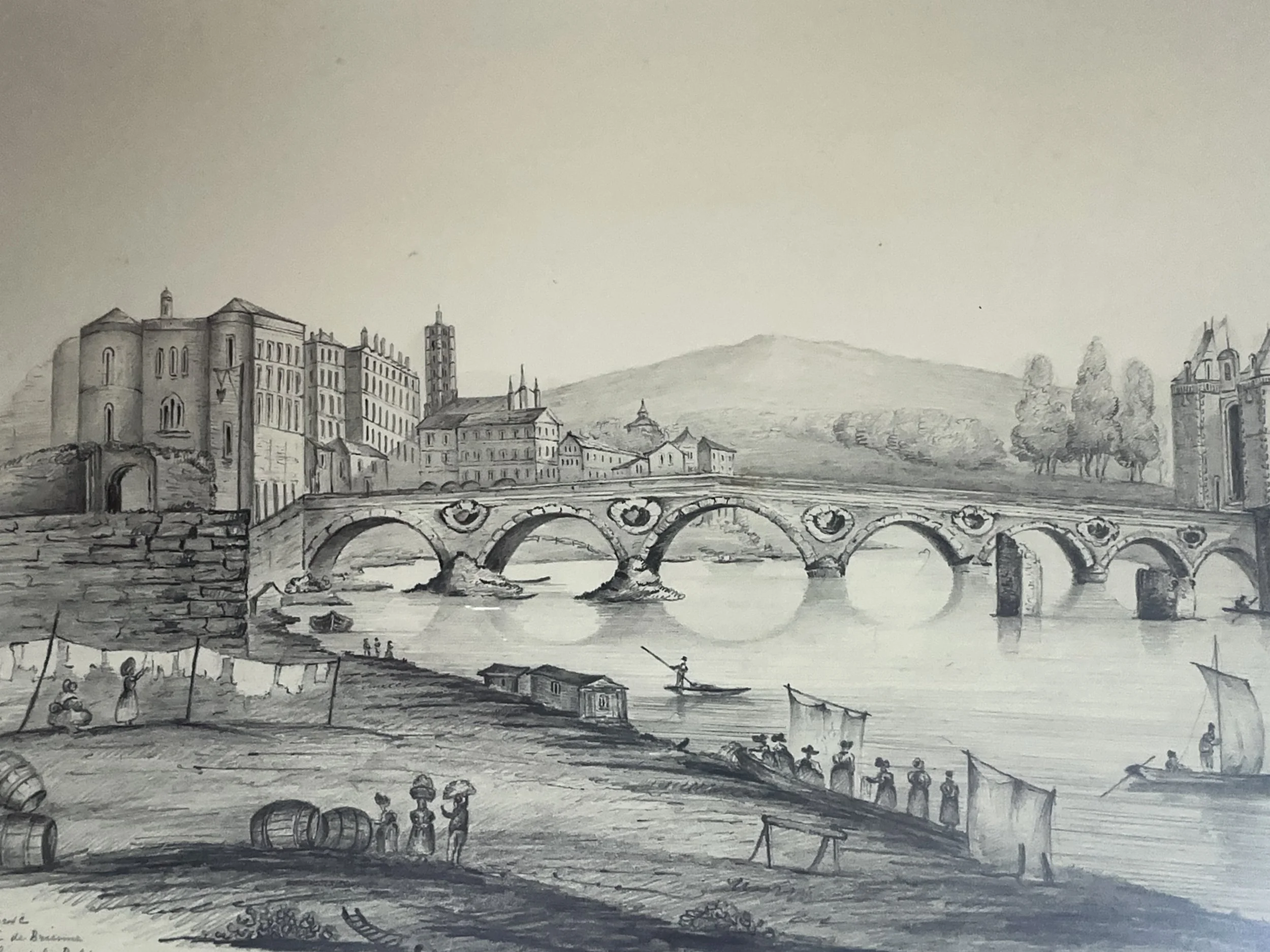 Image 5 of 6
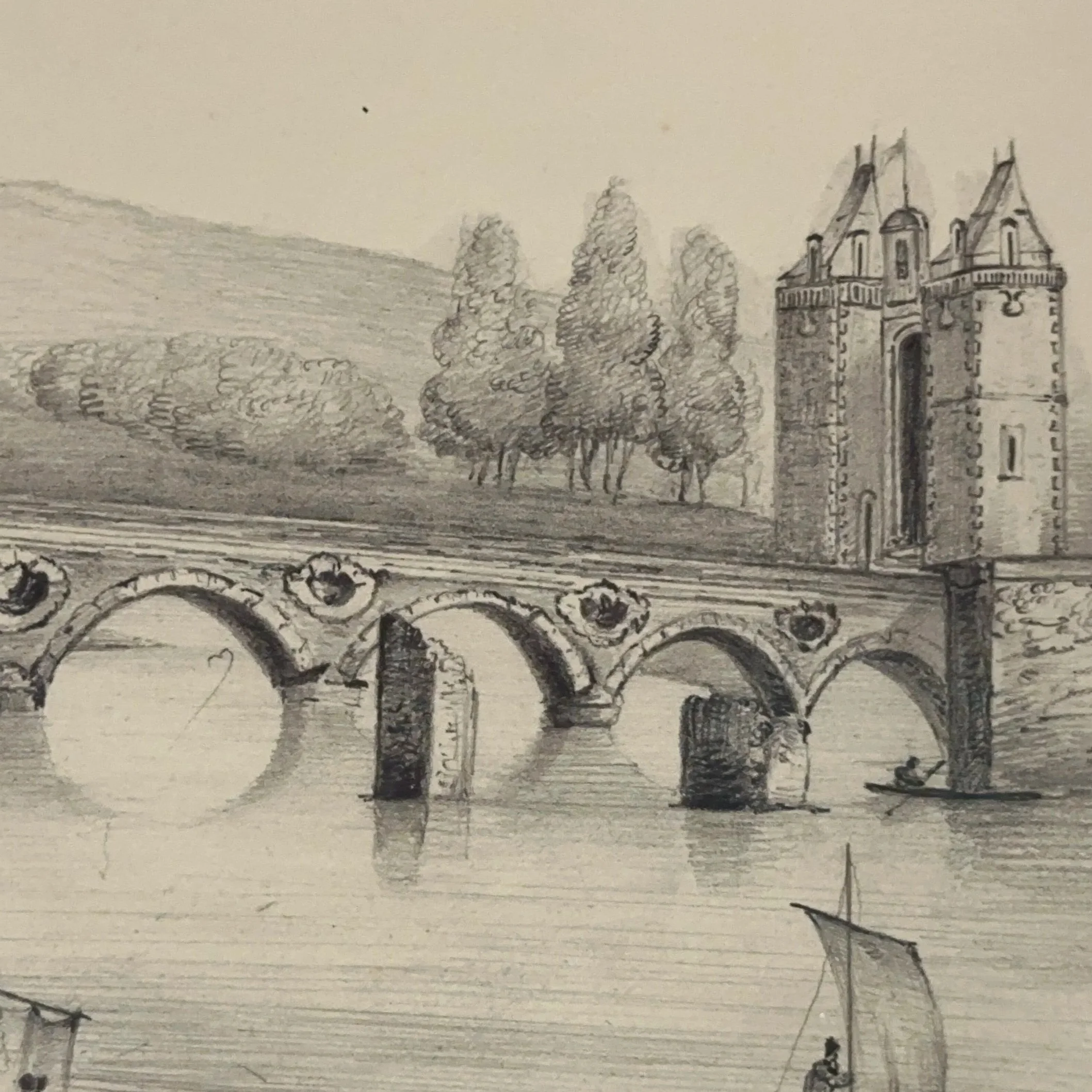 Image 6 of 6