Please review our Return Policy.
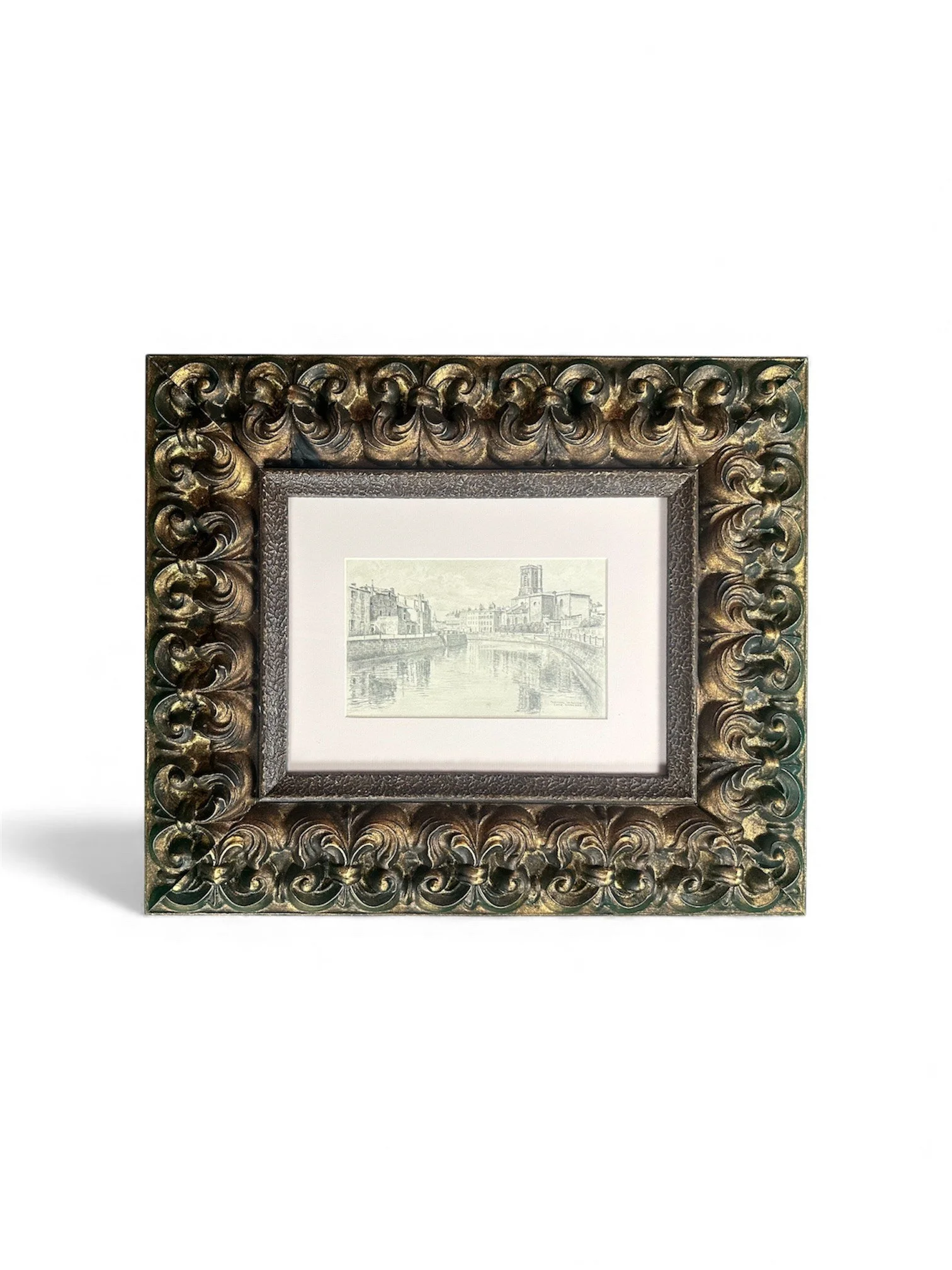
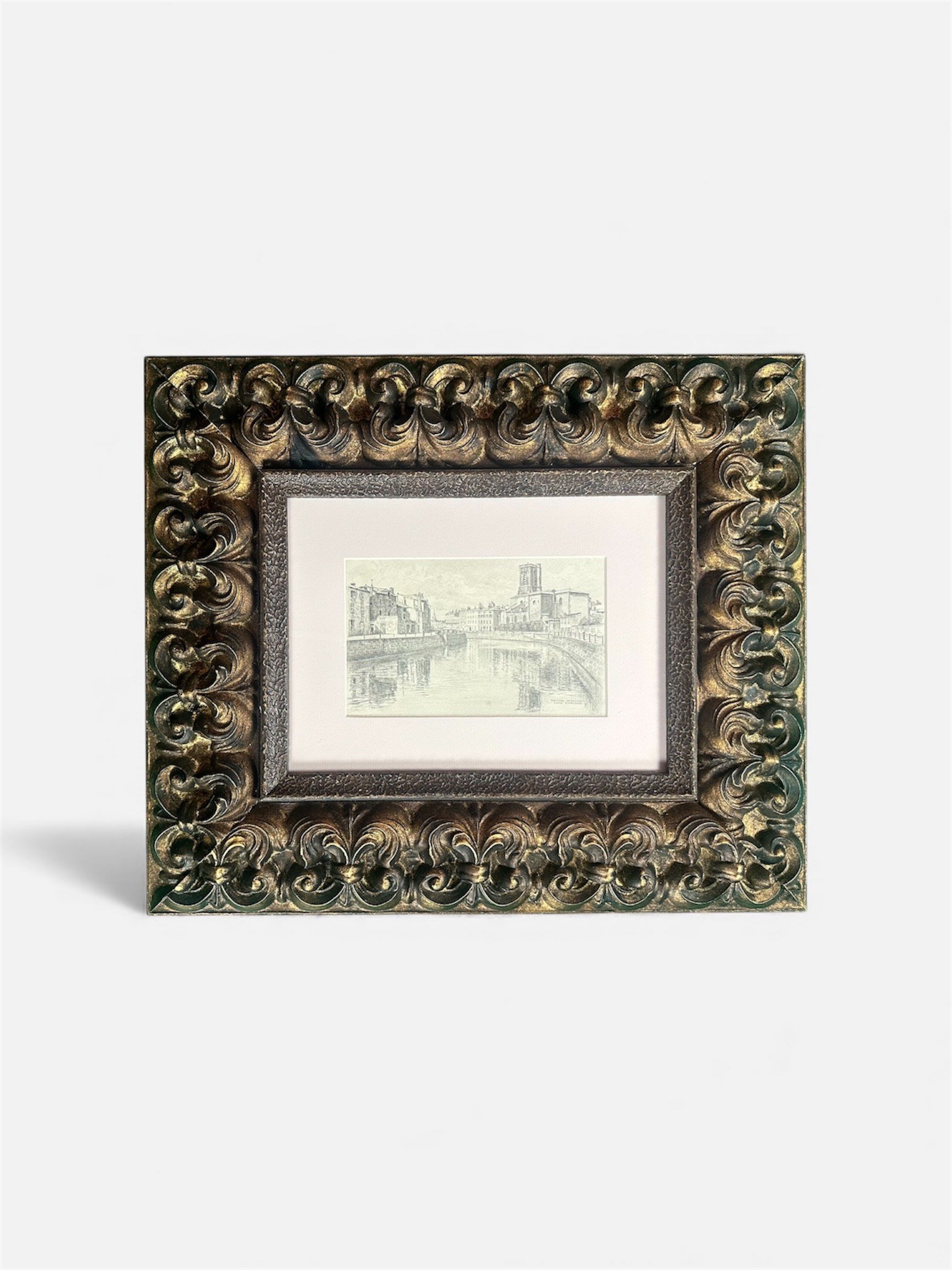
Artist: Arthur Ray Royce (1892-1977)
Approx. Dimensions (Framed): 14.75” × 12”
The Lady Quirk was a wooden sailing vessel with a remarkably long career spanning merchant trade, training, and wartime service. Originally launched as the Raymond in November 1876 and constructed by the shipbuilder Lefurgey in Prince Edward Island, Canada, she exemplifies the sturdy, multi-purpose ships of the late 19th-century sailing era.
As the Raymond, she carried cargoes such as coal and ore along transatlantic routes. Her registry in Swansea, Wales, during this period indicates significant involvement in the Welsh coal trade. In 1929, she was renamed Lady Quirk and underwent substantial alterations that extended her useful life well into the era of steam and motor vessels. From 1930 to 1934, she served as a cadet training ship based in Poole, United Kingdom. During the Second World War, she was taken into Royal Navy service, most likely as a reserve vessel for training or auxiliary duties.
Even by conservative estimates, Lady Quirk enjoyed one of the longest working lives of any wooden sailing ship constructed in the 19th century, remaining in service for approximately 70 to 75 years. She was eventually abandoned in her home port of Swansea between 1950 and 1955. Today, the decayed remains of her hull, consisting primarily of exposed ribs and framing, lie exposed like the skeleton of an archaeological site.
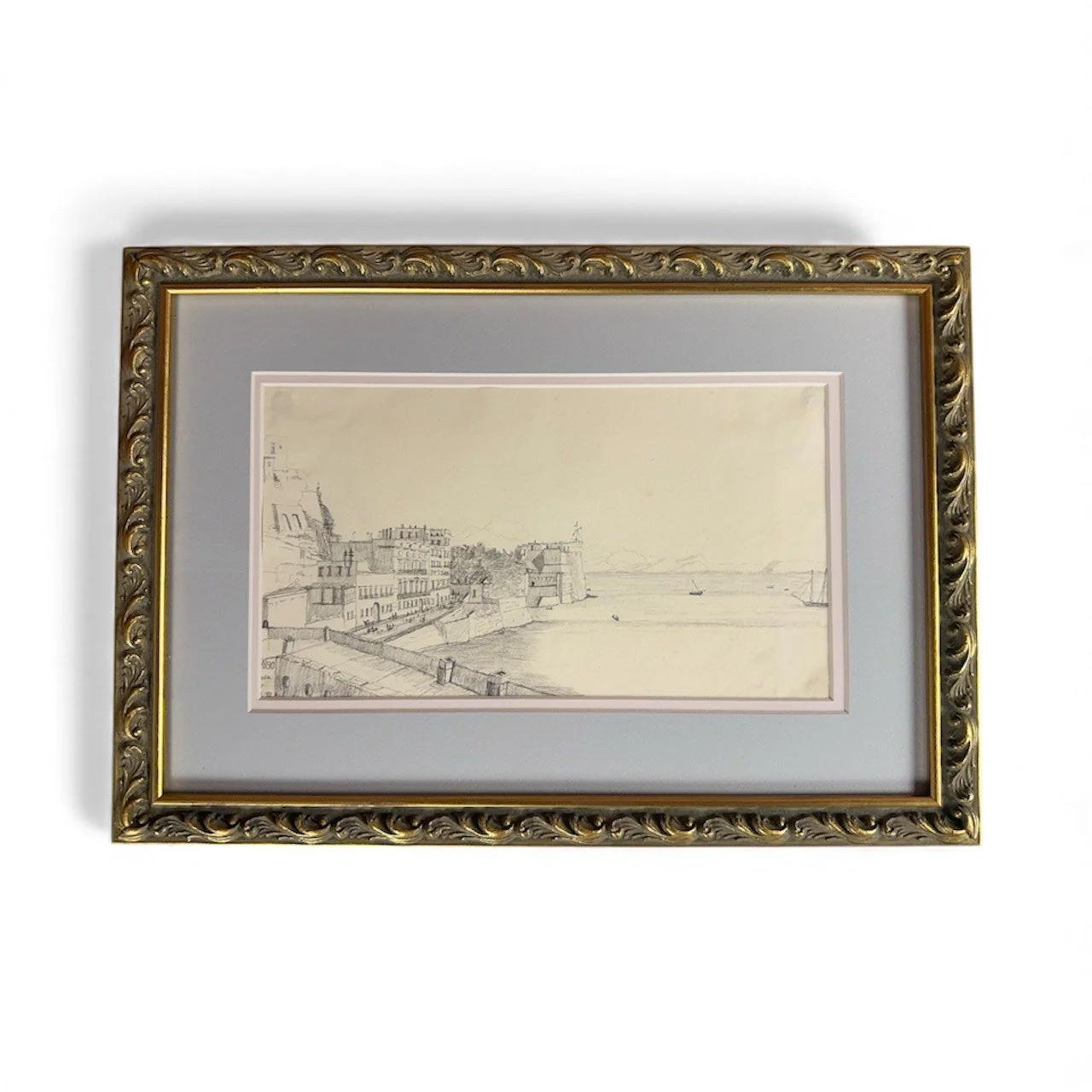
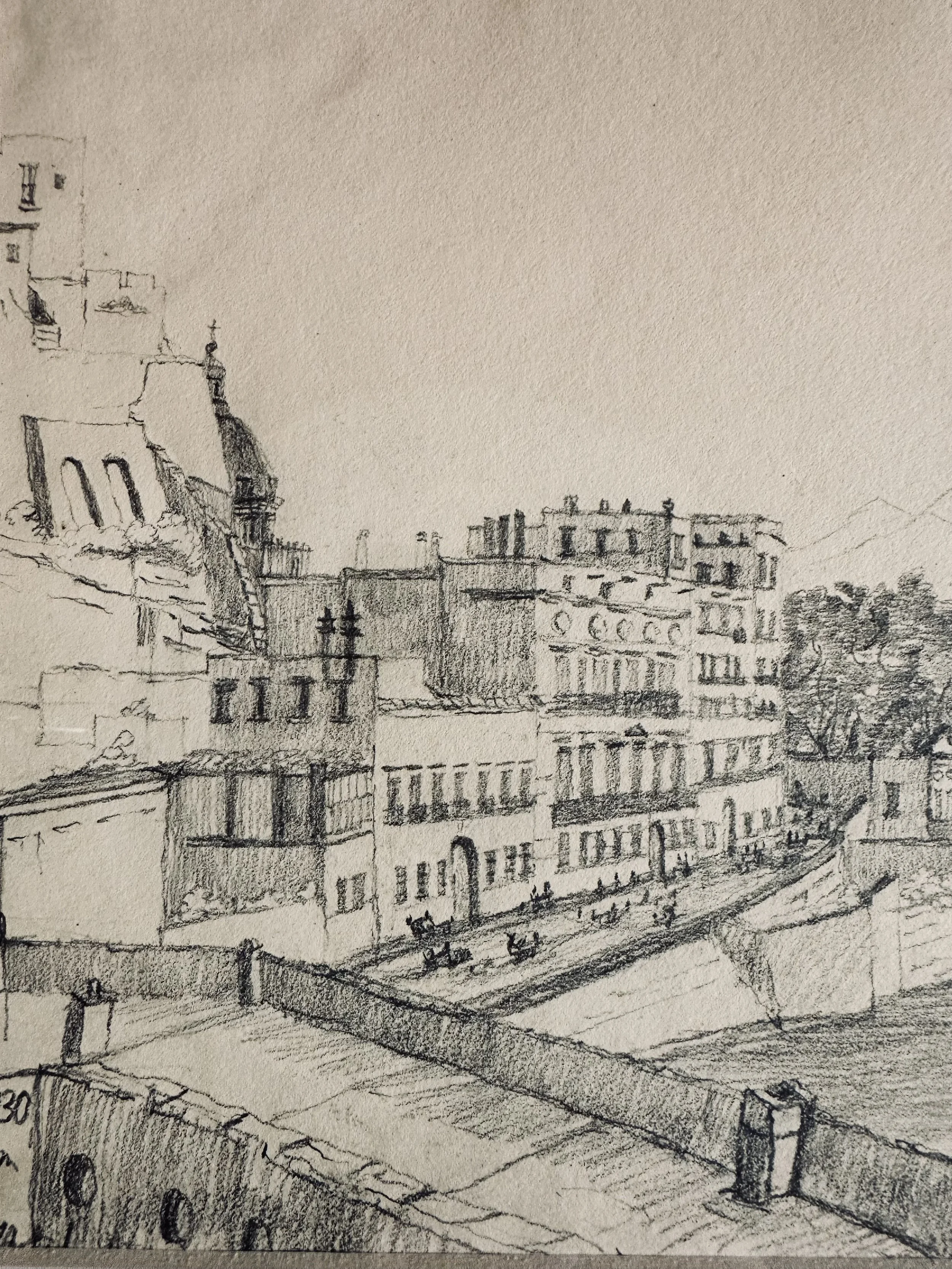
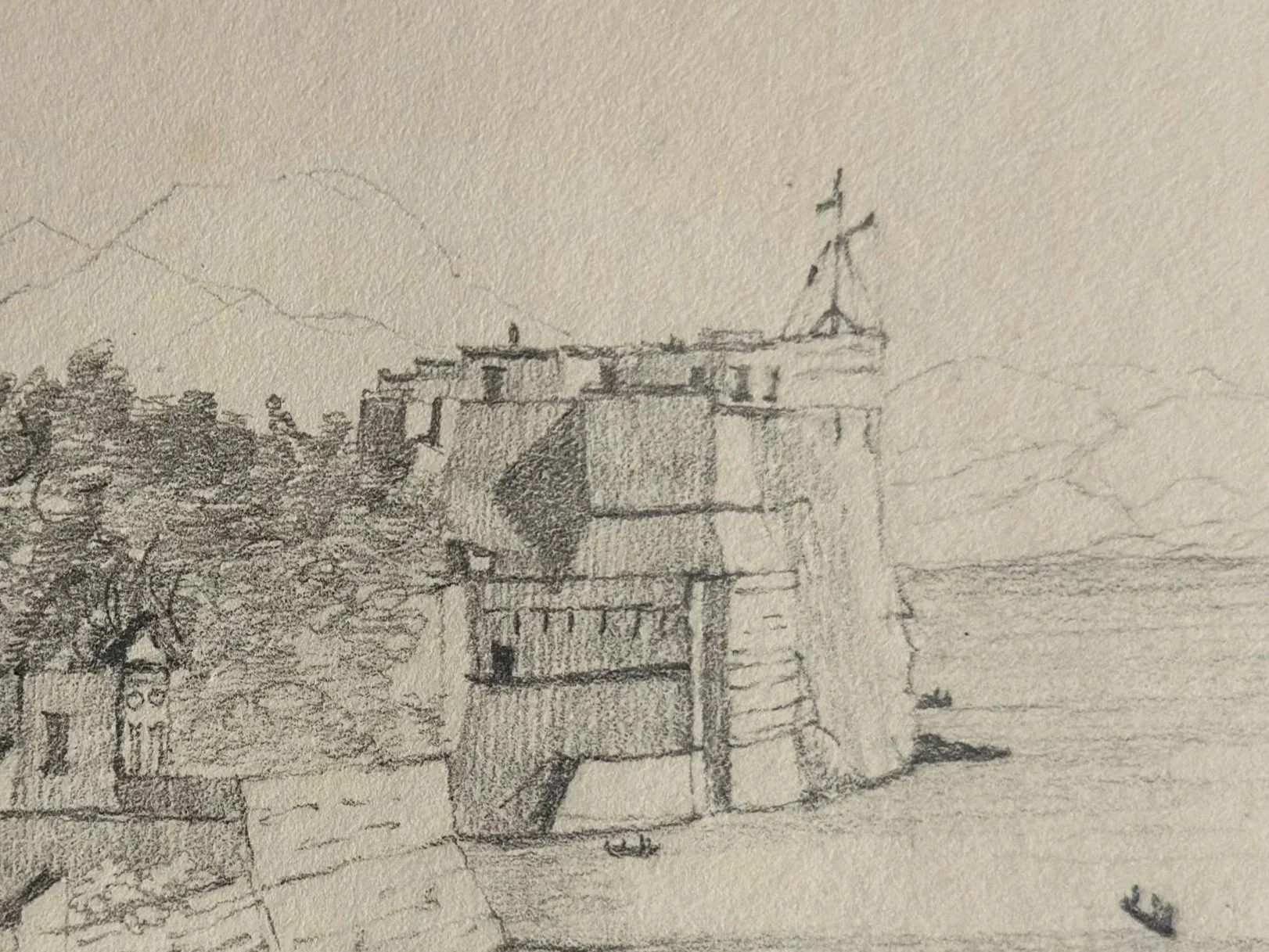
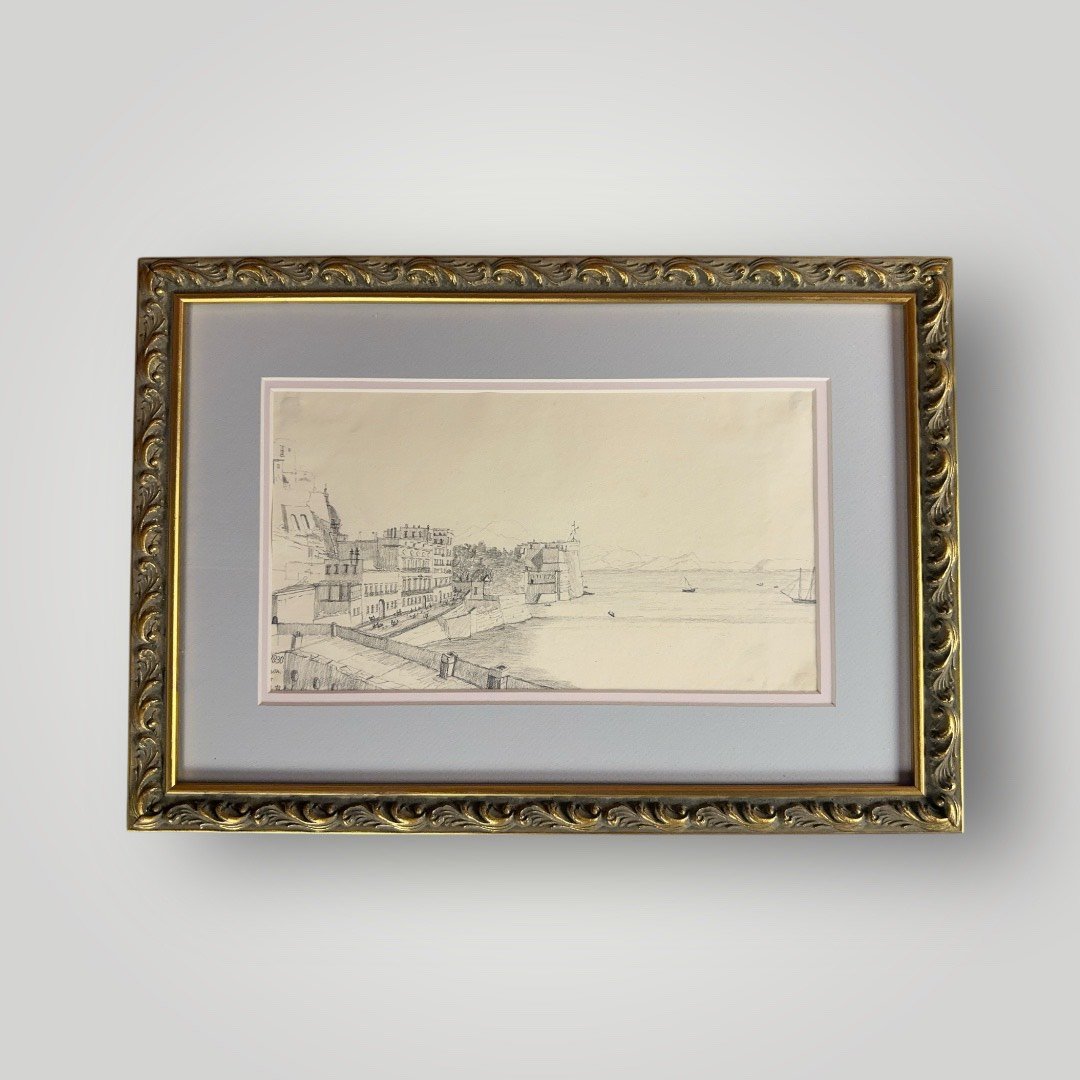
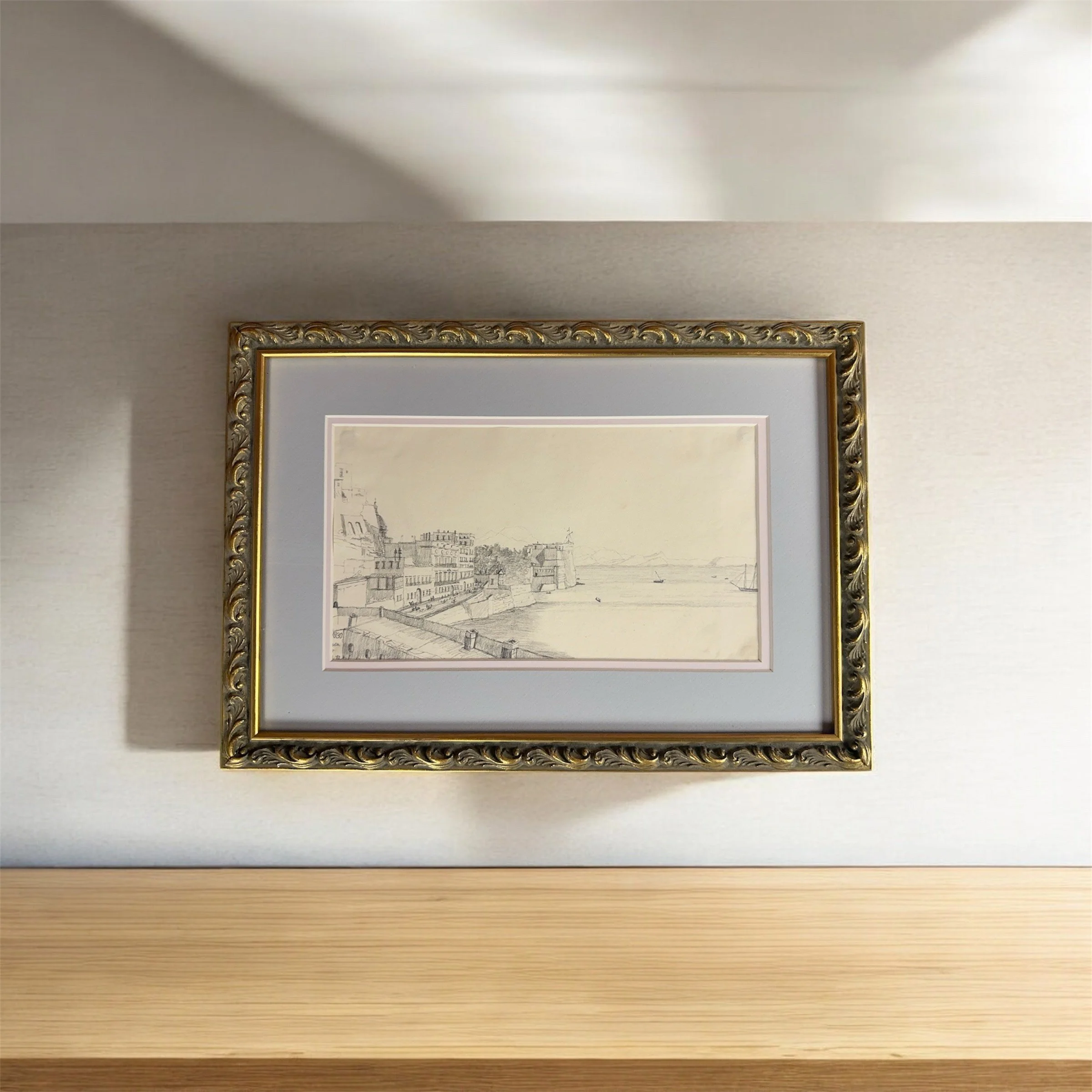
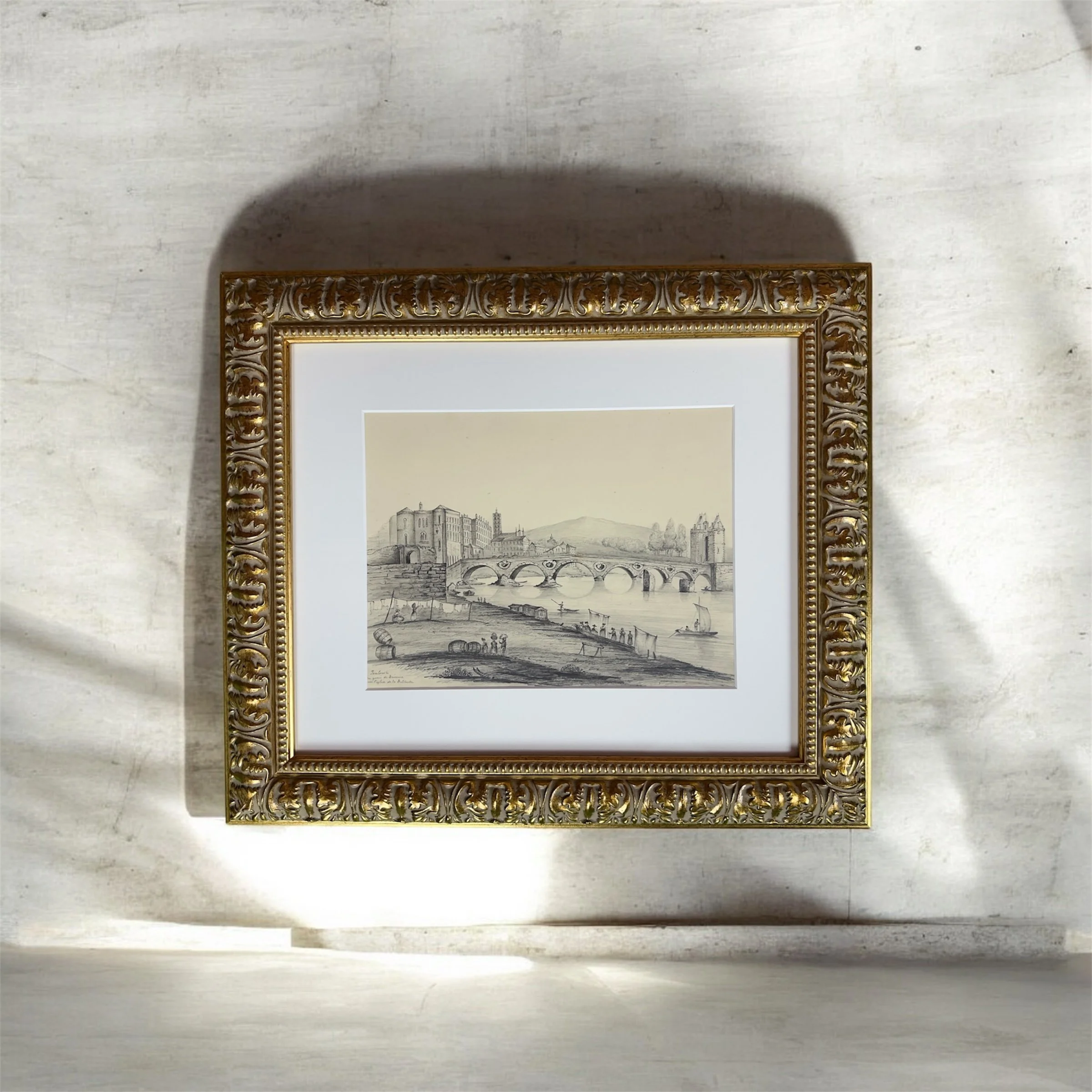
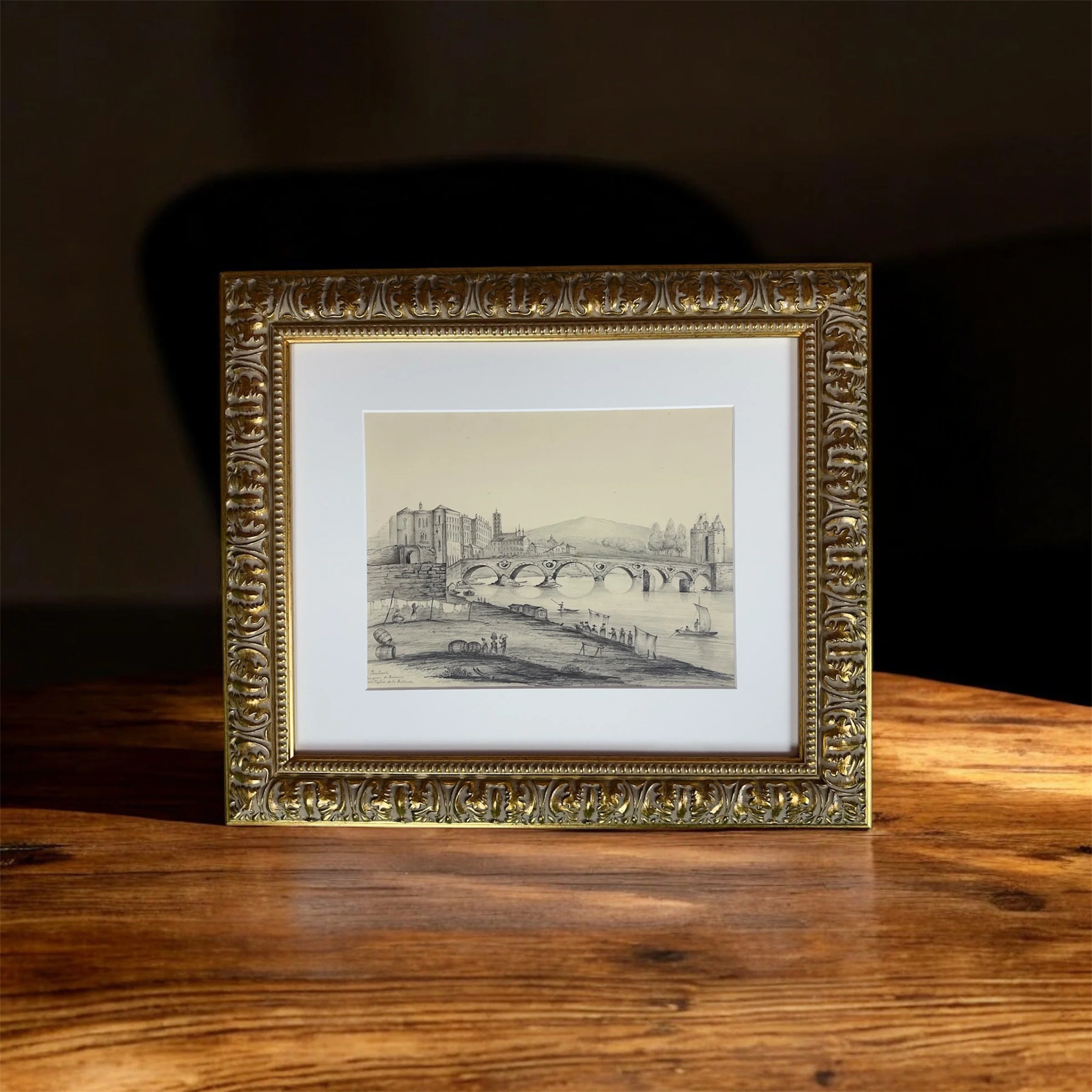
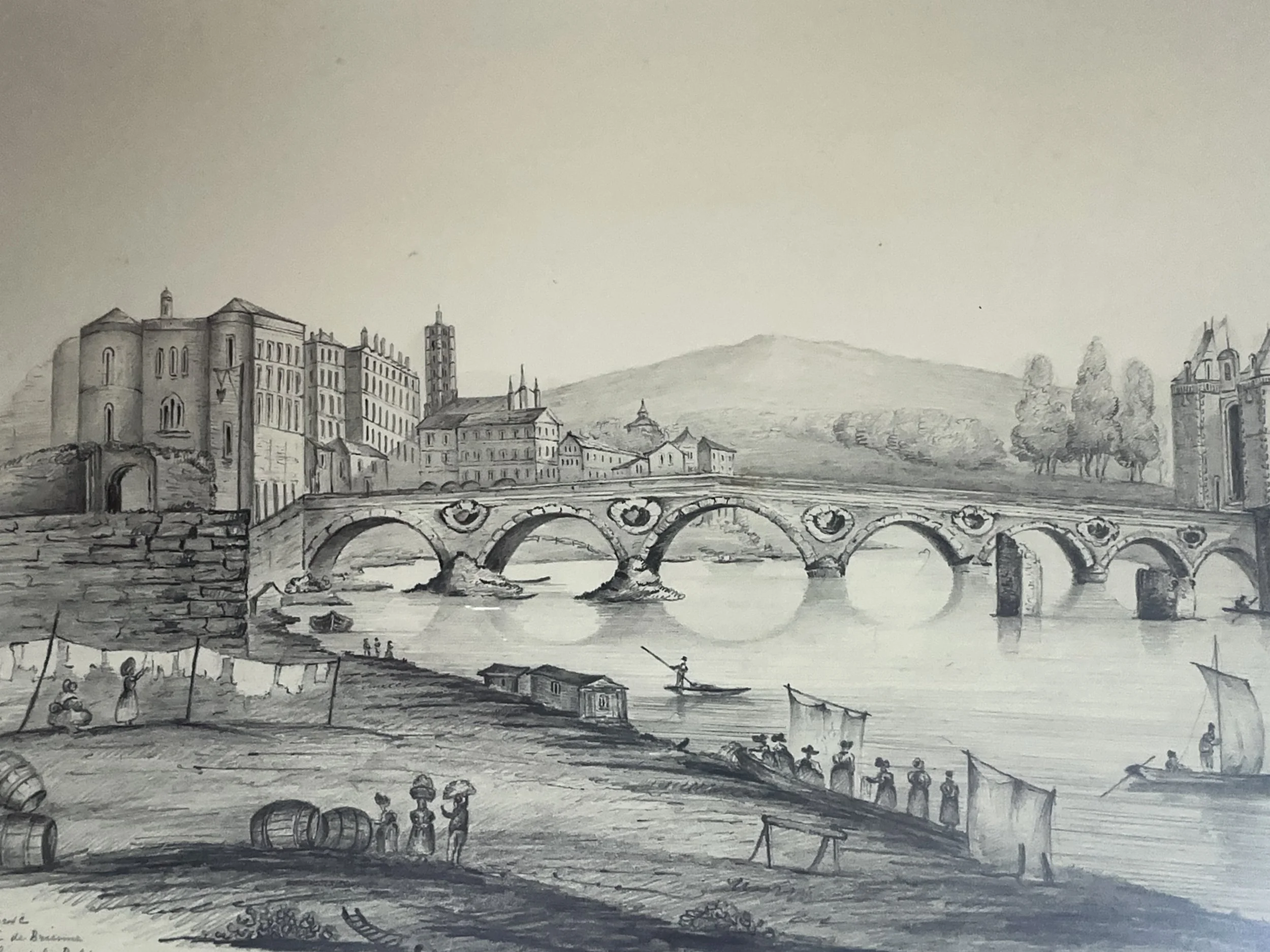
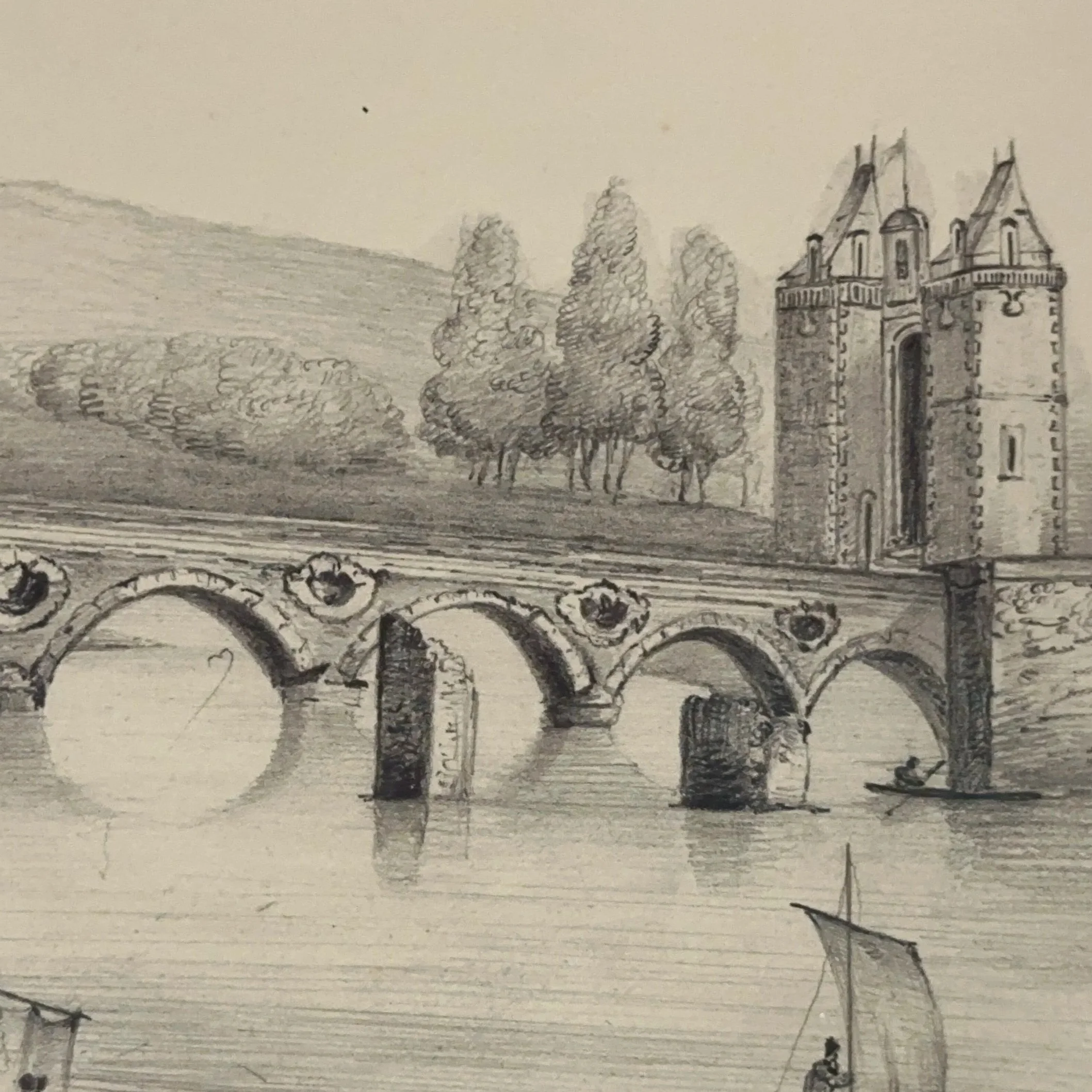
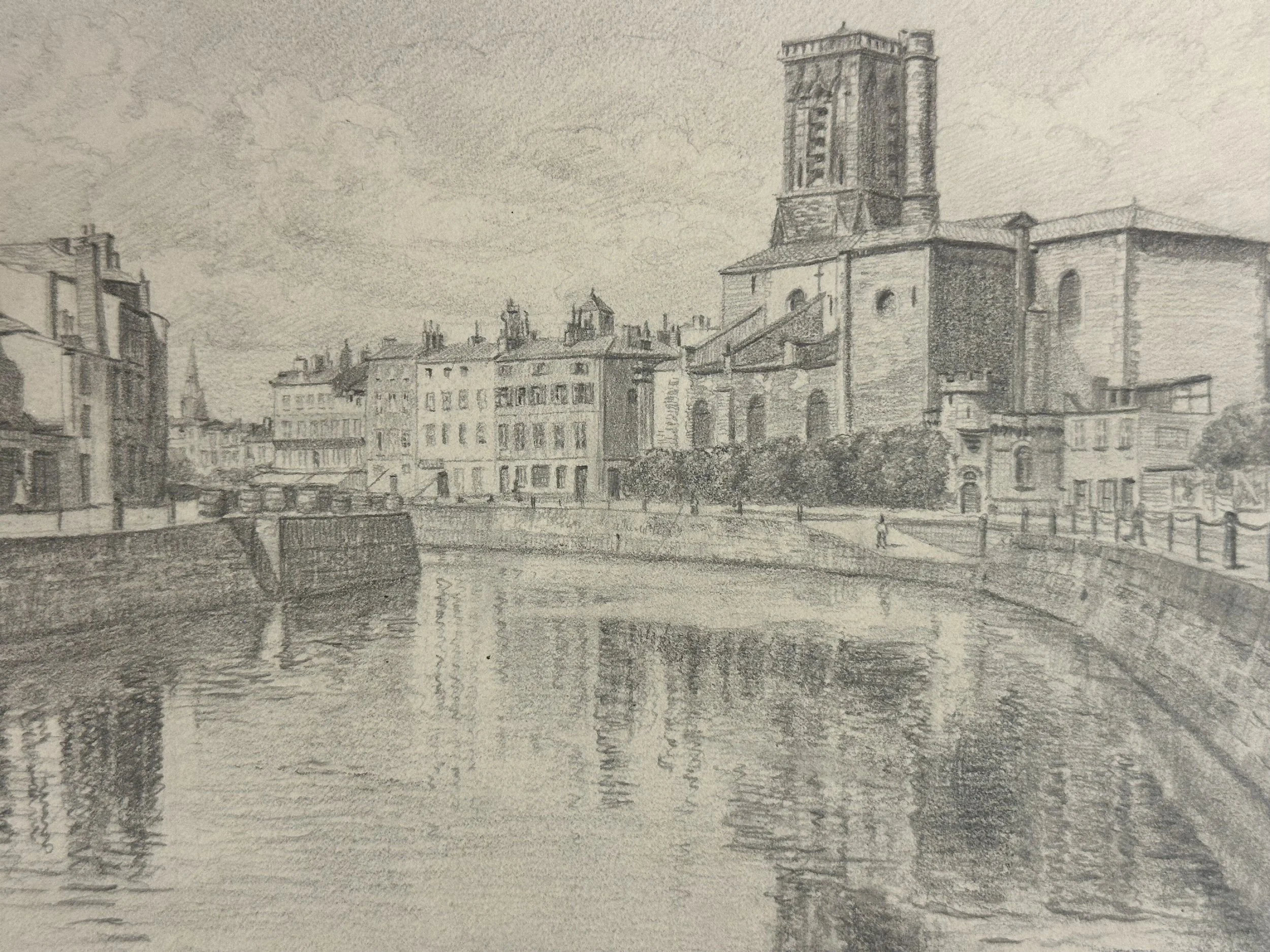
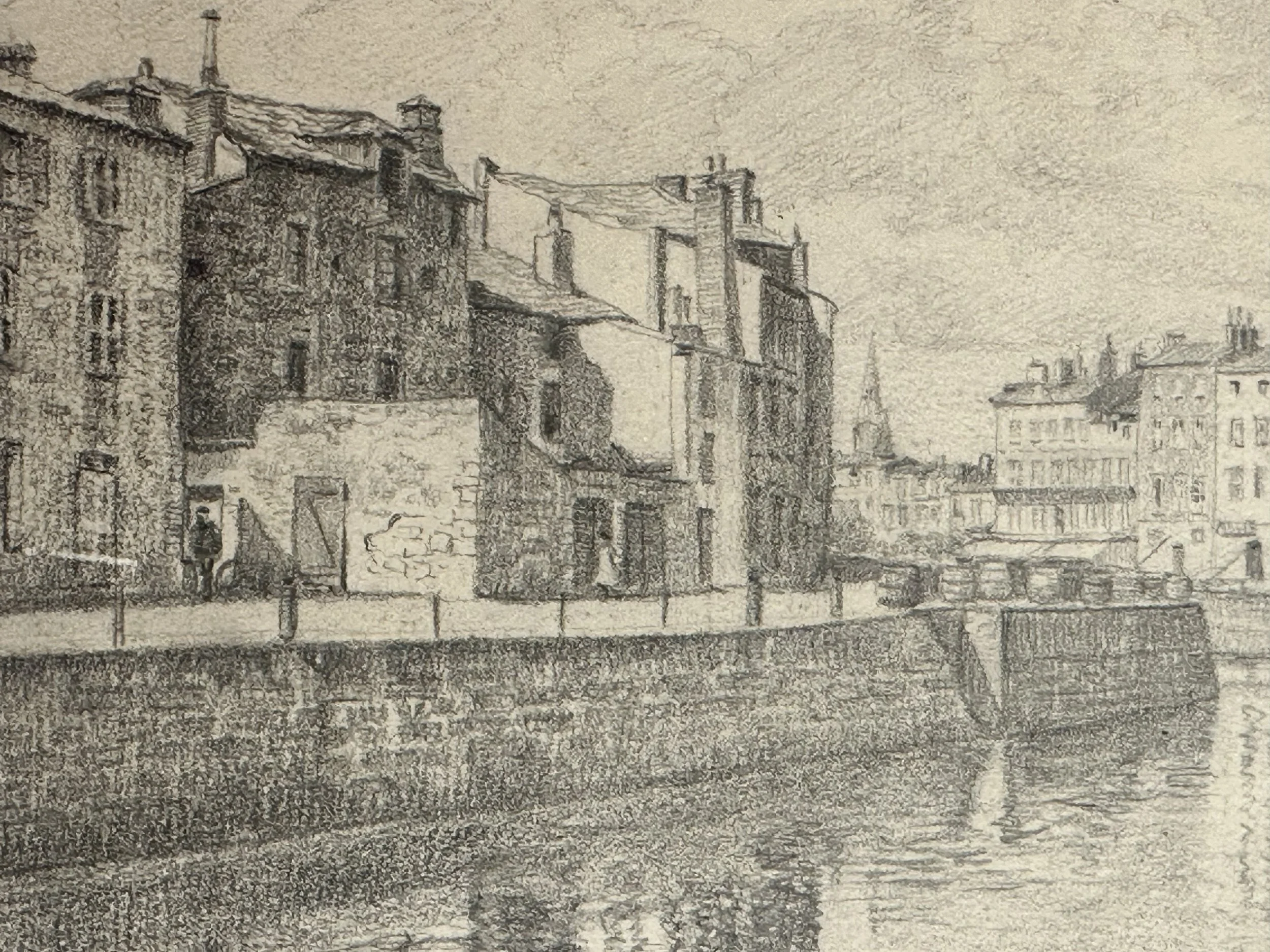
This delicate and atmospheric pencil drawing, signed by the artist, captures the Lady Quirk, during her final years of active service. The sensitive rendering of her graceful three-masted silhouette against the quiet waters perfectly evokes the twilight of the age of sail.
Please review our Return Policy.
Artist: Arthur Ray Royce (1892-1977)
Approx. Dimensions (Framed): 14.75” × 12”
The Lady Quirk was a wooden sailing vessel with a remarkably long career spanning merchant trade, training, and wartime service. Originally launched as the Raymond in November 1876 and constructed by the shipbuilder Lefurgey in Prince Edward Island, Canada, she exemplifies the sturdy, multi-purpose ships of the late 19th-century sailing era.
As the Raymond, she carried cargoes such as coal and ore along transatlantic routes. Her registry in Swansea, Wales, during this period indicates significant involvement in the Welsh coal trade. In 1929, she was renamed Lady Quirk and underwent substantial alterations that extended her useful life well into the era of steam and motor vessels. From 1930 to 1934, she served as a cadet training ship based in Poole, United Kingdom. During the Second World War, she was taken into Royal Navy service, most likely as a reserve vessel for training or auxiliary duties.
Even by conservative estimates, Lady Quirk enjoyed one of the longest working lives of any wooden sailing ship constructed in the 19th century, remaining in service for approximately 70 to 75 years. She was eventually abandoned in her home port of Swansea between 1950 and 1955. Today, the decayed remains of her hull, consisting primarily of exposed ribs and framing, lie exposed like the skeleton of an archaeological site.
This delicate and atmospheric pencil drawing, signed by the artist, captures the Lady Quirk, during her final years of active service. The sensitive rendering of her graceful three-masted silhouette against the quiet waters perfectly evokes the twilight of the age of sail.

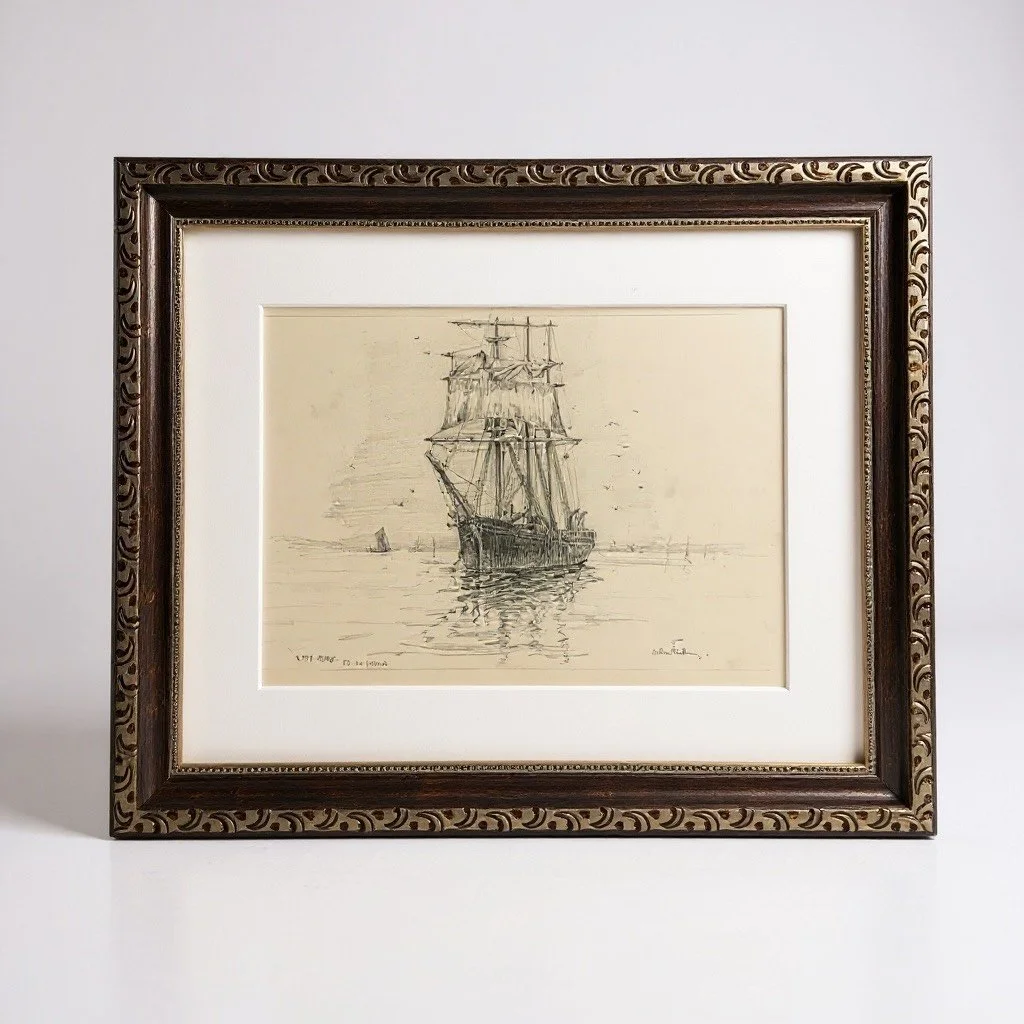 Image 1 of 7
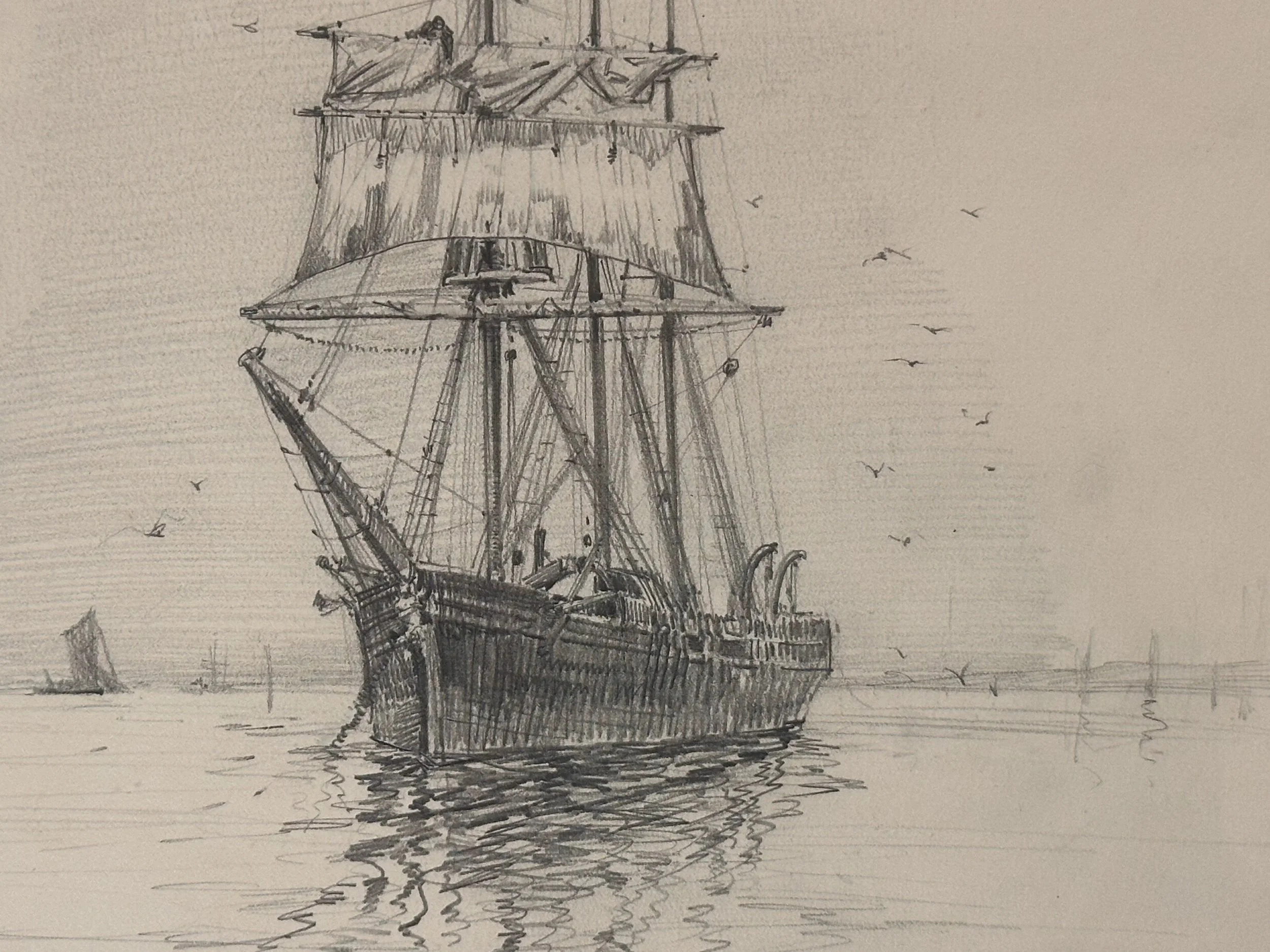 Image 2 of 7
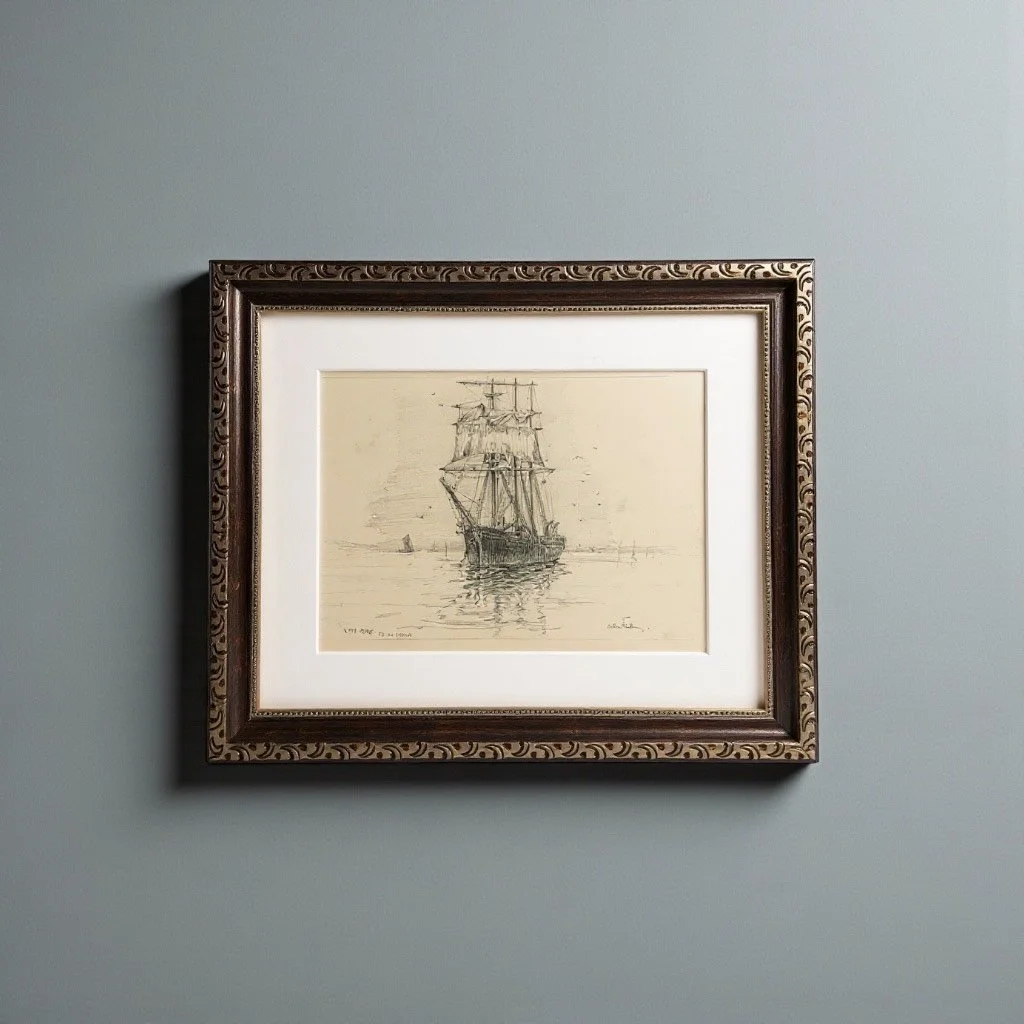 Image 3 of 7
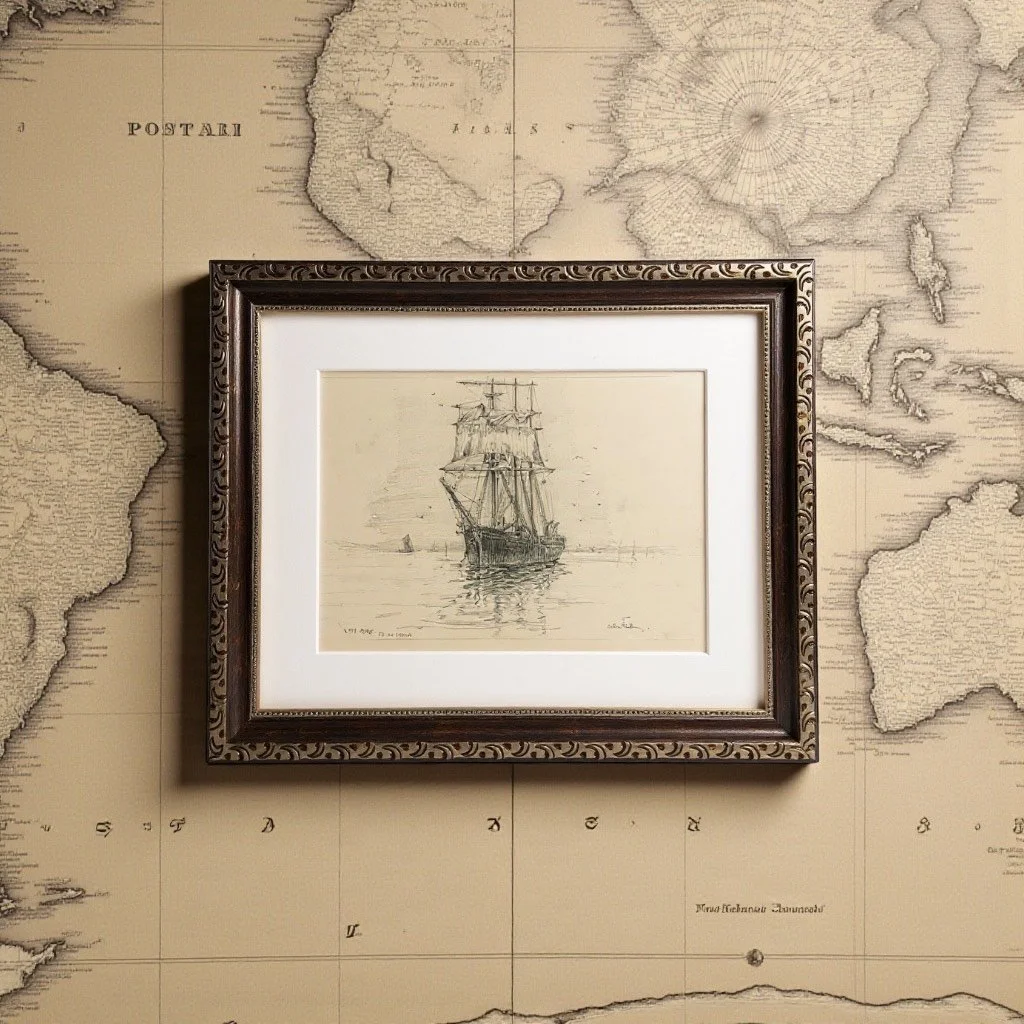 Image 4 of 7
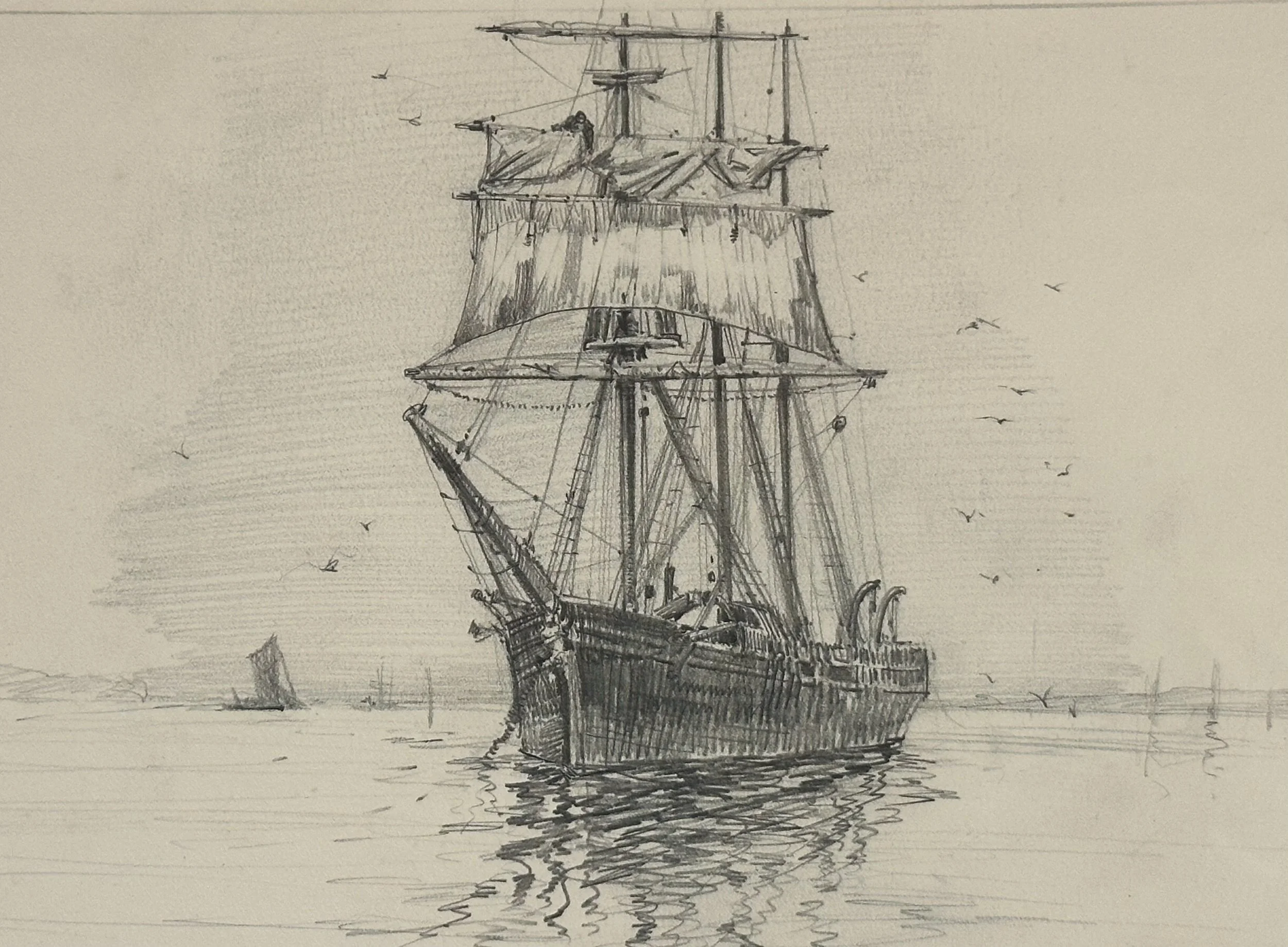 Image 5 of 7
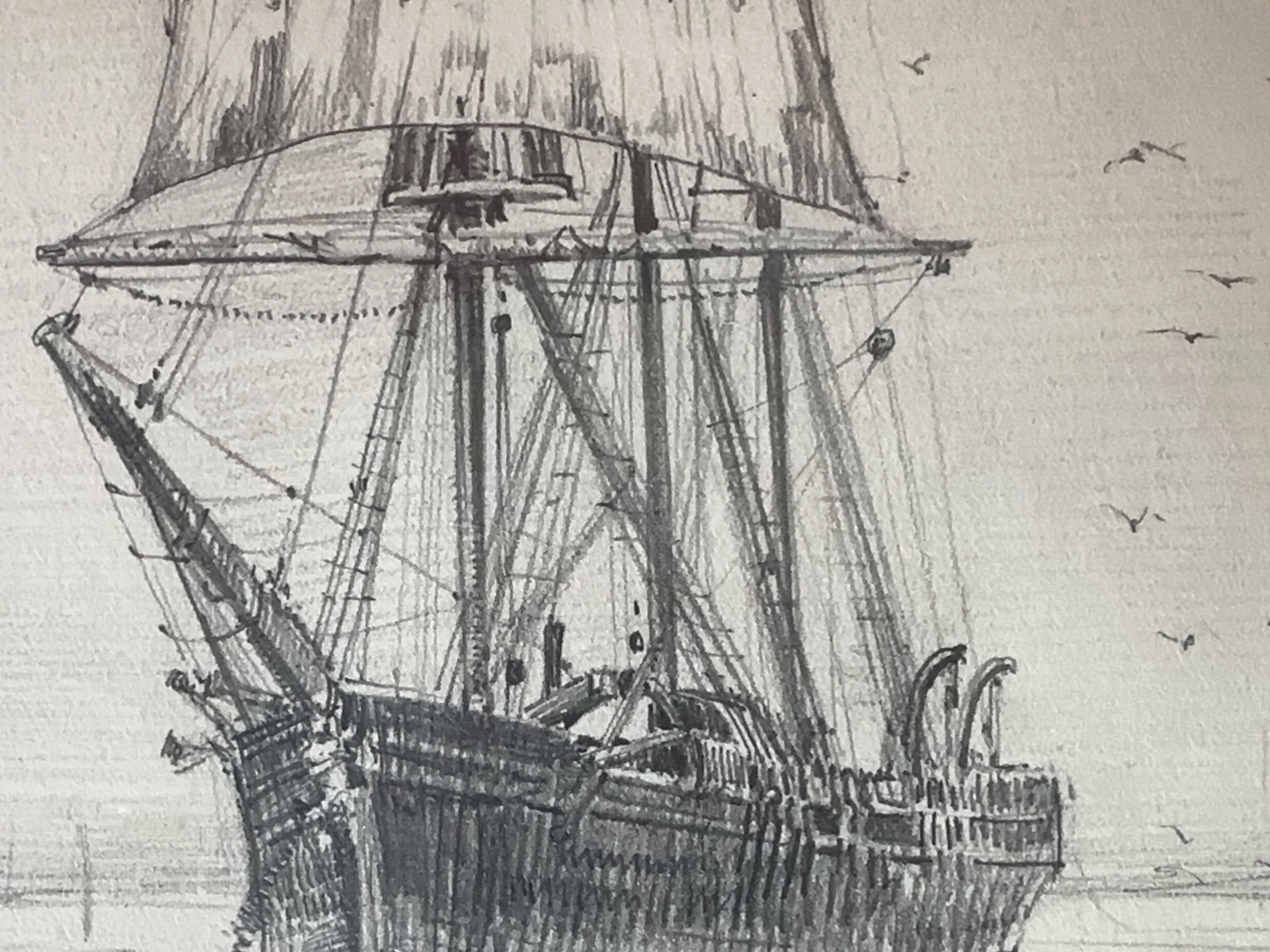 Image 6 of 7
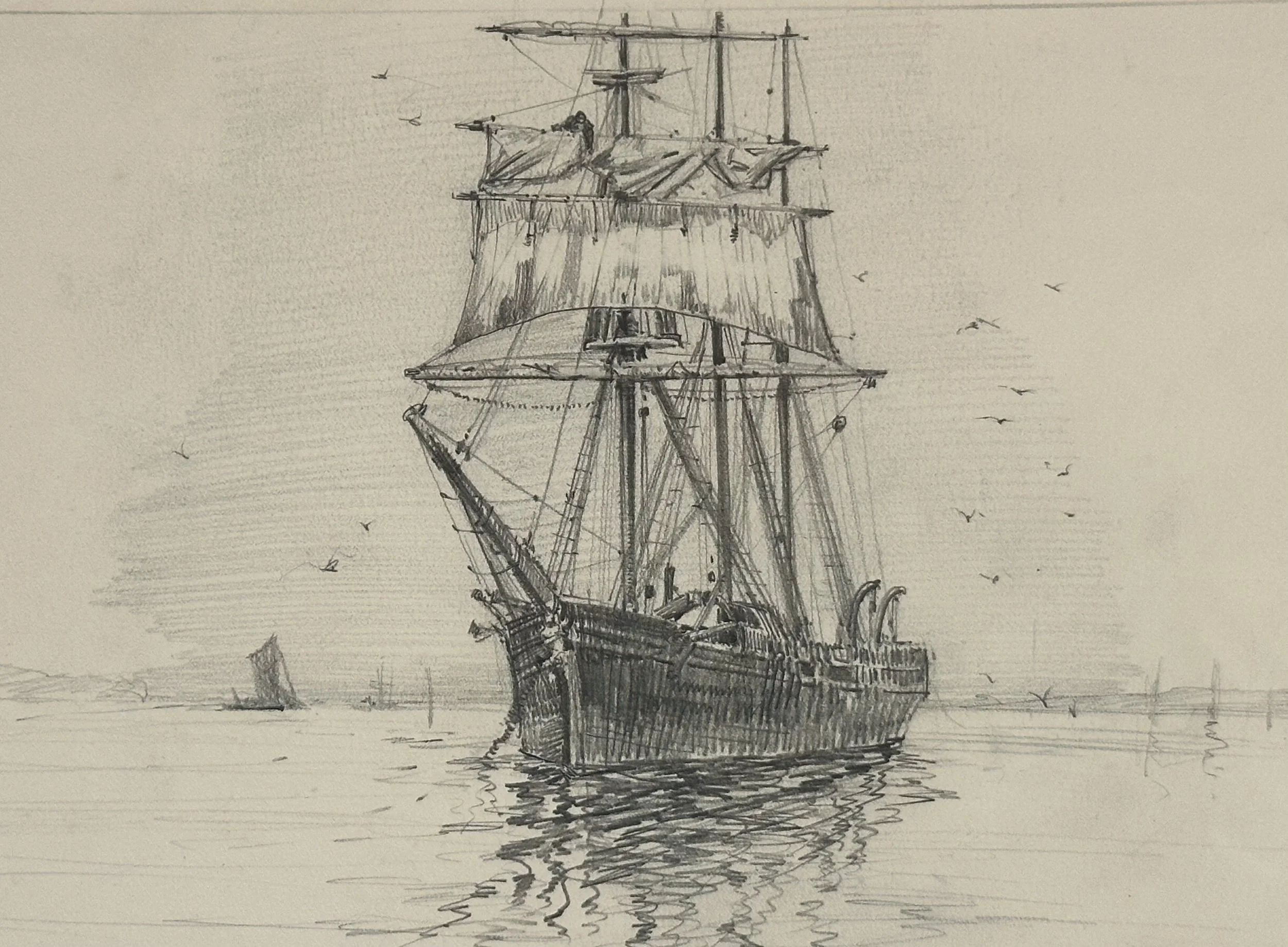 Image 7 of 7